

 Inventory management in sheet metal fabrication is not just an internal warehouse concern. For OEMs and industrial buyers, it can affect quoting accuracy, lead time reliability, repeat-order performance, production scheduling, and whether finished parts arrive when downstream teams expect them.
A fabrication project may start with drawings, specifications, and a purchase order, but the schedule depends on whether the required material can be sourced, received, allocated, tracked, processed, finished, assembled, and shipped without avoidable delays. When inventory planning is weak, even a well-quoted job can stall. When inventory management is tied to real production needs, the entire program becomes easier to plan.
For one-time prototypes or first articles, inventory management helps verify material availability before a timeline is promised. For repeat production programs, it becomes even more important. Forecasts, release schedules, approved substitutions, supplier coordination, and revision control all help determine whether the next order starts smoothly or restarts the same material scramble all over again.
Inventory Management Is a Program Reliability Issue
Manufacturers often think about inventory in terms of carrying cost: how much material is on the shelf, how long it sits there, and how much cash is tied up in stock. Those concerns matter, but they are only part of the picture.
For fabrication buyers, inventory management also affects reliability. If a fabricator cannot see what material is available, what is allocated, what needs to be ordered, and what demand is expected next, it becomes harder to protect production schedules. Material uncertainty becomes lead time uncertainty, and lead time uncertainty can quickly become a customer problem.
Strong inventory management helps reduce that risk by connecting material planning to the actual work being quoted, scheduled, and produced. It supports better communication between purchasing, estimating, production, quality, finishing, assembly, and shipping so material-related issues can be addressed before they interrupt the job. This is why inventory planning belongs in the same conversation as lead time estimating and overall RFQ-to-delivery planning.
Demand Forecasting Helps Repeat Programs Stay Predictable
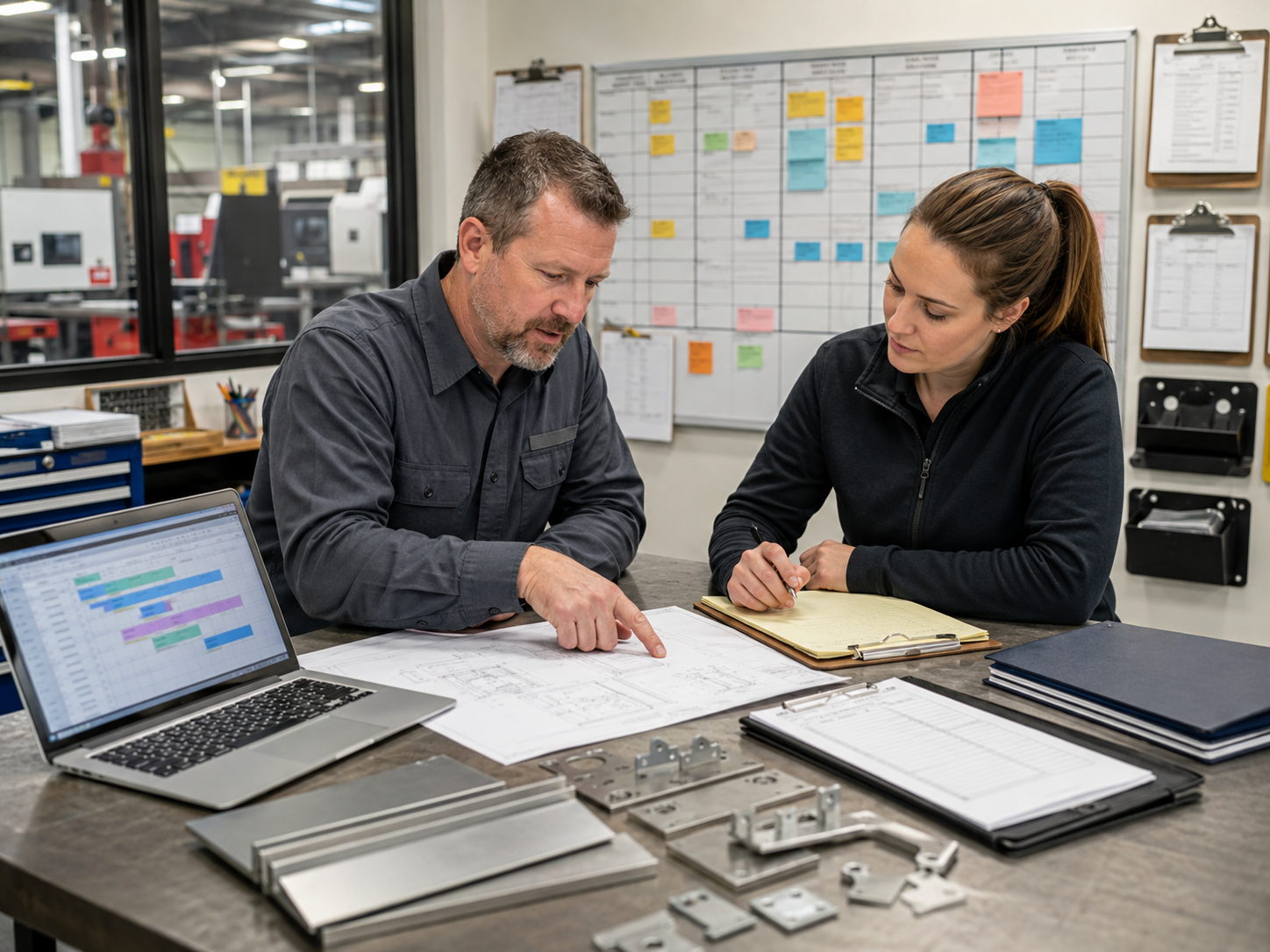 Demand forecasting is one of the most important inventory tools for repeat fabrication programs. A fabricator does not need perfect future certainty, but it does need enough visibility to understand whether a customer expects one order, a short run, a recurring release schedule, or a long-term production program.
Forecasting helps determine whether material should be purchased job by job, planned around future releases, or discussed as part of a broader supply arrangement. It also gives the fabricator a better chance to identify potential sourcing issues before demand becomes urgent.
For buyers, this means forecasts should be treated as operational information, not just purchasing estimates. If expected demand is likely to change, if a program is ramping up, or if a customer plans to release work in stages, sharing that information helps the fabricator plan material, capacity, finishing, packaging, and delivery more realistically.
Blanket Orders and Release Schedules Can Improve Planning
Repeat programs often benefit from clearer release planning. Blanket orders, scheduled releases, and agreed production windows can help fabricators plan material more effectively than a series of disconnected purchase orders.
A blanket order does not automatically mean a fabricator should hold unlimited inventory, and a release schedule does not eliminate every supply chain variable. But these tools can create better visibility into expected demand, especially when lead times are tight or materials require advance planning.
For customers, release planning can reduce the risk of last-minute sourcing delays. For fabricators, it helps align material purchasing with real production needs rather than reacting to each order as if it were brand new. The result is a more predictable rhythm for both sides, especially in build-to-order manufacturing environments where customer requirements, release timing, and production planning need to stay aligned.
Safety Stock Should Be Planned, Not Assumed
 Safety stock can be useful when a customer has repeat demand, critical materials, long supplier lead times, or a production schedule that cannot tolerate frequent delays. But safety stock should be planned carefully. Carrying too much material creates cost and storage concerns, while carrying too little can leave a program exposed when demand changes or supplier availability tightens.
The right safety stock approach depends on the project. A high-volume repeat part may justify a different material strategy than a low-volume custom assembly. A material with stable availability may not need the same planning as a specialized grade, finish, thickness, or certified material.
For buyers, the key is to discuss inventory expectations clearly. If a material needs to be available for recurring releases, that should be part of the program conversation. If the customer expects the fabricator to hold material, both sides should understand the quantity, timing, ownership, revision risk, and conditions under which that stock will be used.
Just-in-Time Inventory Has Limits in Custom Fabrication
Just-in-time inventory can reduce waste and carrying costs, but it has limits in custom and precision fabrication environments. Many fabricated parts require specific materials, finishes, thicknesses, hardware, documentation, or customer-approved components. If those inputs are not readily available when needed, a strict just-in-time approach can create schedule risk instead of efficiency.
This does not mean fabricators should overstock every material. It means inventory strategy should reflect the actual requirements of the work. Some jobs can be sourced as needed. Others require advance purchasing, supplier coordination, or planned material availability to protect production dates.
For OEMs, the practical question is not whether a fabricator follows a specific inventory philosophy. It is whether the inventory approach supports the program’s cost, timing, quality, and reliability requirements. That is also why procurement teams should ask about material planning as part of broader fabrication RFQ diligence.
Supplier Relationships Affect Material Availability
Inventory management does not stop at the fabricator’s door. Supplier relationships play a major role in material availability, delivery reliability, documentation, and responsiveness when requirements change.
Strong supplier relationships can help fabricators confirm availability, understand lead times, manage substitutions, source specialized materials, and respond when market conditions shift. They can also support better communication when a material is delayed, discontinued, or available only in a different form than expected.
For buyers, this matters because supplier uncertainty often becomes fabrication uncertainty. A fabricator that understands its supplier base, purchasing patterns, and material requirements is better positioned to quote realistic dates and communicate early if something changes. Strong inventory planning is one practical way a fabrication partner can create value across the broader manufacturing supply chain.
Inventory Tracking Systems Support Better Decisions
Modern inventory management depends on accurate, current information. Fabricators need to understand what material is on hand, what has already been committed to active jobs, what is on order, what is waiting to be received, and what still needs to be sourced.
A manufacturing-specific ERP system helps connect inventory information with estimating, purchasing, job routing, scheduling, production status, and customer requirements. That connection matters because inventory decisions affect more than purchasing. They can change a quote, shift a production schedule, delay finishing, or affect delivery commitments.
Without a connected system, teams may rely on spreadsheets, informal updates, or assumptions that are difficult to verify. With better inventory tracking, fabricators can make decisions based on current material status and communicate more accurately with customers. For buyers who want to understand this operational layer in more detail, inventory visibility is what connects material status to the jobs moving through the shop.
Material Handling and Storage Protect Quality
Inventory management is not only about whether material exists. It is also about whether material remains usable. Sheet metal, plate, hardware, purchased components, and finished parts all need to be handled and stored in ways that protect quality and prevent damage.
Improper storage can create scratches, corrosion, contamination, warping, mix-ups, or handling damage that may not appear until the job is already underway. These problems can affect production flow, finishing quality, inspection results, and delivery timing.
For buyers, strong material handling practices reduce the risk that a project will lose time to avoidable rework. This is especially important for cosmetic parts, powder-coated components, printed panels, assemblies, enclosures, and any work requiring clean finishes or tight quality expectations.
Traceability Matters for Quality and Compliance
Some fabrication programs require more than basic material availability. They require traceability. Customers may need to know where material came from, what specifications it meets, how it was processed, and whether documentation is available to support quality or compliance requirements.
Traceability is especially important for regulated, quality-sensitive, or specification-driven work. Material certifications, revision control, inspection records, and lot information may all matter depending on the application.
When traceability is built into inventory and production management, documentation can follow the job more cleanly. When it is treated as an afterthought, the project may slow down while teams search for missing records, verify material history, or resolve documentation gaps. For programs with certification or compliance requirements, this connects directly to the supplier’s broader quality system and production controls.
Revision Control Prevents Inventory Waste
Inventory planning becomes more complicated when drawings or specifications change. If material has already been purchased for one revision, a late change may affect whether that material can still be used. If a customer changes finish requirements, quantities, hardware, tolerances, or assembly details, existing material plans may need to be reviewed.
This is why revision control matters. Fabricators and buyers need a clear understanding of which drawing is current, what changed, and whether the change affects material requirements. Without clean revision control, teams risk purchasing the wrong material, allocating inventory to the wrong version of a part, or discovering too late that existing stock no longer supports the project.
For repeat programs, revision control is even more important. A stable program becomes difficult to manage if old and new versions of a part are circulating at the same time without clear instructions. Good revision control also supports the kind of early planning that helps engineers reduce avoidable fabrication cost before first article.
Continuous Improvement Keeps Inventory Planning Aligned
Inventory management is not a one-time setup. Demand changes, supplier conditions shift, customer programs evolve, and production requirements become clearer over time. Good inventory management requires ongoing review.
For fabrication programs, continuous improvement may include reviewing slow-moving inventory, refining reorder points, improving material flow, adjusting safety stock assumptions, identifying recurring shortages, or improving communication around forecasts and releases.
The goal is not to create a perfect inventory system once and never touch it again. The goal is to keep material planning aligned with real customer demand and real production behavior. That is what helps inventory management support cost control, lead time reliability, and repeat-program performance over time.
Inventory Management at EVS Metal
EVS Metal supports precision sheet metal fabrication programs with inventory practices designed to improve material planning, production flow, and delivery reliability. By connecting inventory management with estimating, purchasing, fabrication, finishing, assembly, inspection, and shipping, EVS helps customers reduce preventable material-related delays.
EVS uses MIE Trak Pro as its manufacturing ERP system to connect inventory, purchasing, job routing, scheduling, production status, and customer requirements across departments. This gives teams better visibility into material status and active work, which supports more accurate planning and clearer communication.
For repeat production programs, EVS can work with customers around forecasts, release schedules, revision control, material requirements, and production timing. That planning helps create a more reliable path from quote to production to delivery, especially when programs involve multiple fabrication steps, finishing requirements, assembly, packaging, or ongoing releases.
With facilities in New Jersey, Texas, Pennsylvania, and New Hampshire, EVS supports projects ranging from prototypes and first articles to repeat production programs and complex assemblies. To discuss inventory planning, repeat production, or material requirements for an upcoming fabrication project, request a quote or contact the EVS facility best suited to support your program.
Frequently Asked Questions
Why does inventory management matter in sheet metal fabrication?
Inventory management affects material availability, lead time, production scheduling, cost control, quality, and delivery reliability. If material is unavailable, damaged, misallocated, or tied to the wrong revision, the project can be delayed even when the drawings and quote are complete.
How does inventory management support repeat fabrication programs?
Repeat programs benefit from demand forecasting, release schedules, blanket orders, revision control, and material planning. These practices help the fabricator prepare for recurring demand instead of treating every order as a completely new sourcing event.
What should buyers ask about inventory planning for repeat orders?
Buyers should ask how the fabricator plans for recurring demand, whether material requirements can be forecasted, how releases are scheduled, how revisions are controlled, and whether material availability is reviewed before lead times are confirmed.
Is just-in-time inventory always a good fit for metal fabrication?
Not always. Just-in-time inventory can reduce carrying costs, but custom fabrication often depends on specific materials, finishes, hardware, documentation, or customer-approved components. If those inputs are not available when needed, a strict just-in-time approach can create schedule risk.
Why is material traceability important in fabrication?
Material traceability helps confirm where material came from, what specifications it meets, and whether documentation is available for quality or compliance requirements. This is especially important for regulated or specification-driven work.
How does ERP software support inventory management?
A manufacturing ERP system helps connect inventory, purchasing, estimating, job routing, scheduling, production status, and customer requirements so teams can make decisions based on current material and job information.
What ERP system does EVS Metal use?
EVS Metal uses MIE Trak Pro, a manufacturing ERP system built for job shops and production environments.