

 The questions you ask during a metal fabrication RFQ determine more than which supplier wins the business—they determine whether your program runs smoothly or becomes a quality, cost, and schedule headache after the purchase order is issued. Yet most RFQs focus almost entirely on piece price, lead time, and payment terms while ignoring the capabilities, systems, and practices that actually predict supplier performance.
Procurement professionals operate under real constraints: tight timelines, pressure to demonstrate cost savings, and limited visibility into technical manufacturing details. But asking the right questions during the RFQ process costs nothing and prevents expensive problems that emerge months later when a low-price supplier can’t deliver quality, accommodate design changes, or scale to production volumes.
This guide provides the questions procurement should ask to evaluate fabrication suppliers beyond price—and explains what answers actually indicate about supplier capability and program risk.
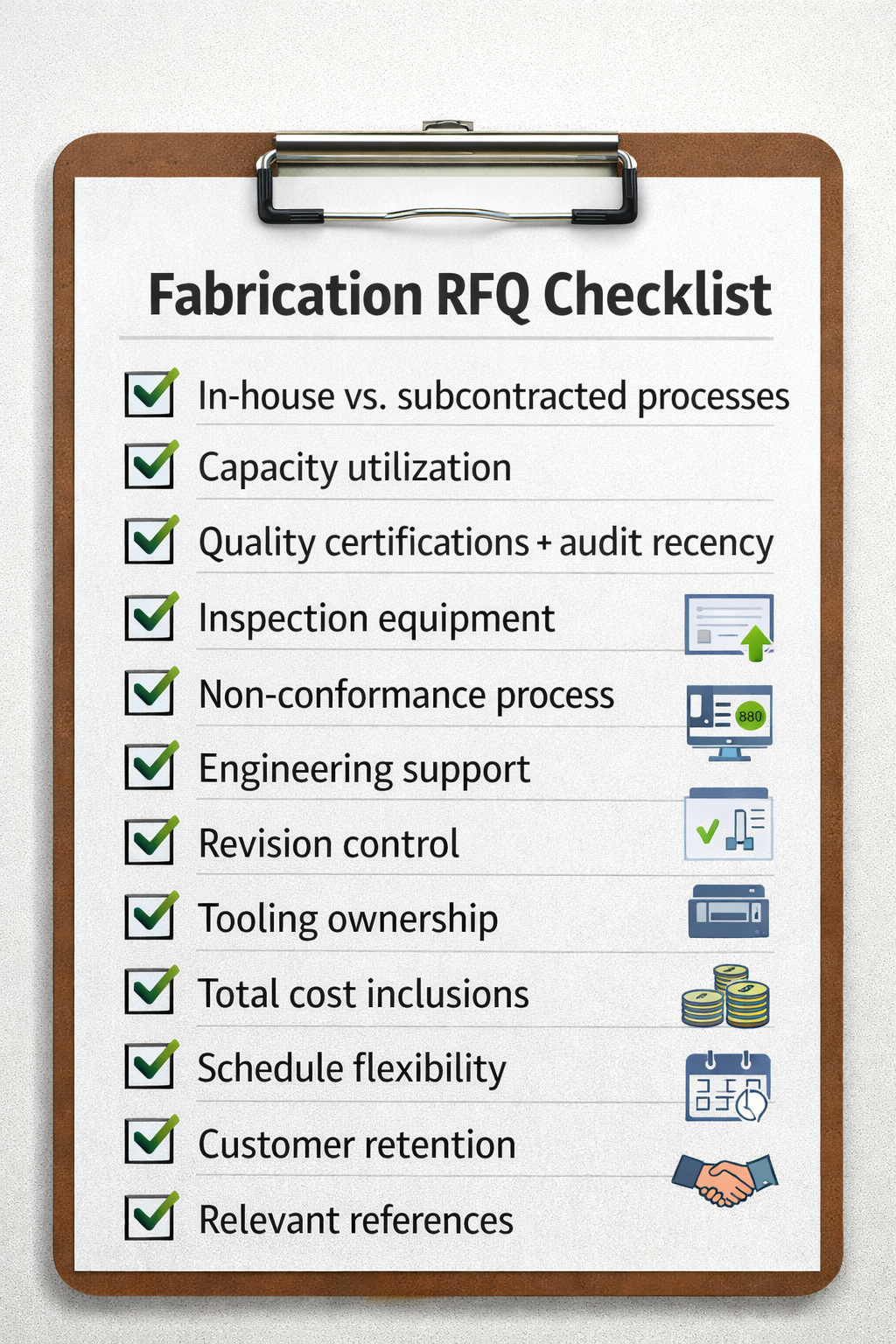
Quick RFQ Checklist: 12 Questions That Predict Supplier Performance
Use these questions to evaluate suppliers beyond piece price:
- In-house vs. subcontracted processes: Who controls the critical steps?
- Capacity utilization: Do they have buffer for disruptions and expedites?
- Quality certifications + audit recency: Are systems active—or just on paper?
- Inspection equipment: Can they verify your specs, not just “check parts”?
- Non-conformance process: How do they contain issues and prevent repeats?
- Engineering support: Who provides DFM and cost-reduction input?
- Revision control: How do they prevent building the wrong revision?
- Tooling ownership: Who owns it, who maintains it, can it move?
- Total cost inclusions: What’s included vs. billed later?
- Schedule flexibility: How do they handle changes and true expedites?
- Customer retention: Do customers stay—and why?
- Relevant references: Have they succeeded with similar programs?
x
The detailed questions below explain what to listen for, what red flags indicate, and how to interpret supplier responses.
 Questions About Manufacturing Capabilities and Equipment
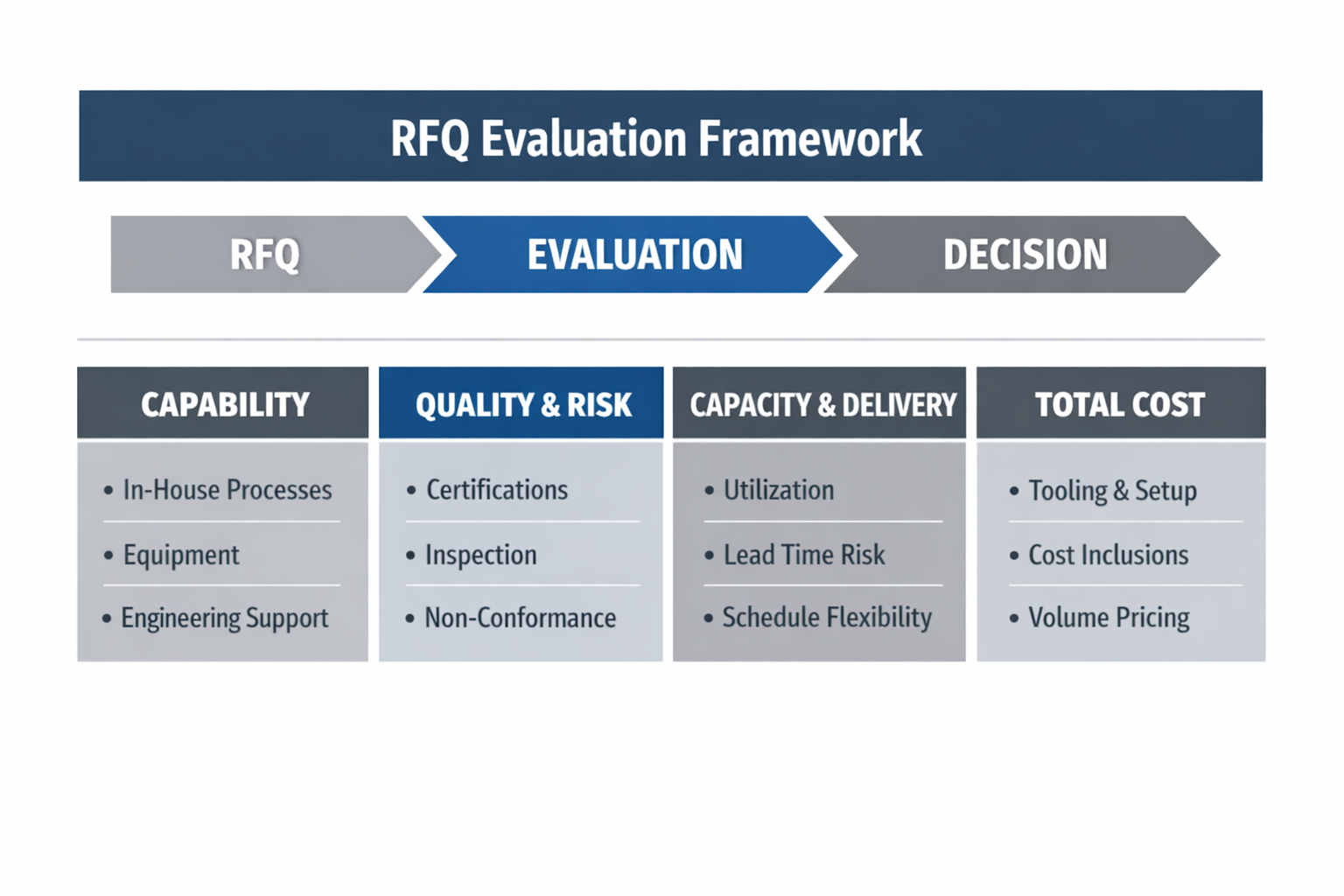 Questions About Manufacturing Capabilities and Equipment
“What specific equipment and processes do you have in-house?”
Why This Matters: Suppliers who own their equipment have more control over quality, schedule, and cost than suppliers who subcontract critical processes. When your parts require laser cutting, forming, welding, and powder coating, a supplier who performs all four internally eliminates three handoff points where delays, quality issues, and coordination problems occur.
What to Listen For:
- Specific equipment details (not “we have laser cutting capability” but “we run a 6kW fiber laser installed in 2023 with nitrogen assist and automated load/unload”)
- Equipment age and maintenance programs
- Capacity utilization (>90% suggests schedule flexibility problems)
- In-house vs. subcontracted processes
Red Flags:
- Vague answers about “partnerships” or “our network”
- No specific equipment details
- Critical processes subcontracted without explanation
Follow-Up Question: “For processes you subcontract, how do you manage quality and schedule accountability?”
“What is your typical tolerance capability, and what tolerances require special processes?”
Why This Matters: Every fabrication shop can hit standard tolerances (±0.010″ on flat dimensions, ±1° on bends). The question reveals which suppliers understand design for manufacturability well enough to explain when tighter tolerances require premium processes—and which suppliers will say “yes” to everything during RFQ then hit you with change orders during production.
What to Listen For:
- Clear explanation of standard vs. premium tolerance capabilities
- Discussion of which features drive cost (tight holes, complex bends, flatness requirements)
- Questions back to you about actual functional requirements vs. drawing tolerances
Red Flags:
- “We can hit any tolerance” (no, they can’t—and they don’t understand the question)
- No questions about why specific tolerances are specified
- Unwillingness to suggest design modifications that could reduce cost
Follow-Up Question: “If we could relax certain tolerances without affecting function, would that reduce cost or lead time?”
“What is your maximum part size and weight capacity?”
Why This Matters: Suppliers who quote parts near their size/weight limits often struggle with quality consistency, handling damage, and equipment constraints. A supplier whose largest press brake is 8 feet shouldn’t be quoting 7-foot parts—they have no margin for setup optimization or process flexibility.
What to Listen For:
- Comfortable capacity margin (quoting 4-foot parts when max capacity is 10 feet)
- Multiple equipment options for your part size range
- Discussion of handling and fixturing for large/heavy parts
Red Flags:
- Your parts are at the upper end of their stated capability
- Only one piece of equipment can handle your parts
- No discussion of handling or secondary operations for large parts
Questions About Quality Systems and Certifications
“What quality certifications do you maintain, and when were you last audited?”
Why This Matters: ISO 9001:2015 certification indicates a supplier has documented quality systems, process controls, and continuous improvement programs. But certification date matters—a supplier certified 15 years ago without recent audits may have systems that exist on paper but not in practice. Recent certification (last 12-18 months) with successful audit results indicates active quality management.
What to Listen For:
- Current ISO 9001:2015 certification (not outdated 9001:2008)
- Recent audit dates and results
- Industry-specific certifications (AS9100 for aerospace, ISO 13485 for medical devices, ITAR registration for defense)
- Willingness to share audit results or conduct facility tour
Red Flags:
- “We follow ISO processes but aren’t certified” (means they don’t)
- Certification expired or suspended
- Unable to provide certificate or audit dates
- Defensive response to quality questions
Follow-Up Question: “Can you share your last audit results or schedule a facility tour before we place orders?”
“What inspection equipment and processes do you use for verification?”
Why This Matters: Suppliers who rely solely on micrometers and calipers can’t verify complex geometries, flatness, or positional tolerances. CMM (Coordinate Measuring Machine) capability, vision systems, or other advanced metrology indicates investment in quality verification beyond basic dimensional checks.
What to Listen For:
- Specific inspection equipment (CMM, optical comparators, height gauges, surface finish measurement)
- Inspection frequency (first article, in-process, final inspection)
- Statistical process control programs
- Gauge calibration programs and traceability
Red Flags:
- Only basic hand tools for inspection
- Inspection performed “as needed” rather than systematically
- No mention of calibration or measurement uncertainty
- Inspection subcontracted to third parties (adds cost and delays feedback)
Follow-Up Question: “What documentation comes with parts—certificates of conformance, inspection reports, material certifications?”
“How do you handle non-conforming material and corrective actions?”
Why This Matters: Every manufacturer encounters quality issues at some point. The question isn’t whether problems occur—it’s how suppliers identify, contain, and prevent recurrence. Suppliers with mature quality systems have documented procedures for containment, root cause analysis, and corrective action. Suppliers without these systems ship problems to customers and repeat the same mistakes.
What to Listen For:
- Documented non-conformance procedures
- Root cause analysis methods (8D, 5-Why, fishbone diagrams)
- Corrective action tracking systems
- Examples of actual corrective actions implemented
Red Flags:
- “We rarely have quality problems” (every manufacturer encounters issues)
- No documented procedures for non-conformance handling
- Blame external factors (material suppliers, customer specs) without discussing internal controls
- No tracking system for repeat issues
Questions About Capacity and Lead Times
“What is your current capacity utilization, and how does that affect my lead time?”
Why This Matters: Suppliers running at 95%+ capacity utilization deliver inconsistent lead times because any upstream delay (material shortage, equipment breakdown, quality hold) immediately impacts customer schedules. Suppliers at 70-85% utilization have buffer capacity to absorb disruptions and accelerate urgent orders when needed.
What to Listen For:
- Honest discussion of capacity utilization
- How they manage peak demand periods
- Flexibility to expedite when needed
- Capacity expansion plans if utilization is high
Red Flags:
- Claimed capacity utilization below 60% (suggests losing business or overstating capacity)
- Capacity at 95%+ with no buffer for disruptions
- Unwillingness to discuss capacity constraints
- “We can always fit you in” (probably means schedule chaos)
Follow-Up Question: “If I need parts two weeks earlier than standard lead time, what does that cost and how often can you accommodate?”
“What factors could extend lead time beyond your quote?”
Why This Matters: Quoted lead time and actual lead time are often different. Understanding manufacturing risk in supply chains means identifying what could disrupt schedules before problems occur. Honest suppliers explain constraints upfront. Unreliable suppliers promise aggressive lead times then miss them.
What to Listen For:
- Material procurement lead times for your specific alloys/thicknesses
- Subcontracted process lead times (if applicable)
- Setup times for new programs vs. repeat orders
- How engineering changes affect schedule
Red Flags:
- “Nothing will extend lead time—we always deliver on schedule”
- No discussion of material procurement or subcontractor dependencies
- Lead time quote much faster than competitors without explanation
- Unwilling to discuss schedule risk factors
Follow-Up Question: “What is your on-time delivery percentage over the last 12 months, and how do you define ‘on-time’?”
“How do you manage schedule changes and expedite requests?”
Why This Matters: Production schedules change. Demand spikes, design issues emerge, customer requirements shift. Suppliers who can accommodate reasonable schedule changes without excessive fees provide flexibility. Suppliers who treat every change as a crisis or opportunity to extract premium pricing create program risk.
What to Listen For:
- Clear expedite fee structure (10-20% premium is reasonable)
- Willingness to accommodate occasional changes
- Discussion of how much notice they need for schedule modifications
- Examples of how they’ve managed customer schedule changes
Red Flags:
- Expedite fees exceeding 50% (suggests poor capacity planning or opportunistic pricing)
- Unwillingness to accommodate any schedule changes
- No defined process for managing changes
- Defensive response to questions about flexibility
Questions About Engineering Support and Design Collaboration
“What engineering resources do you have, and how do they support customer programs?”
Why This Matters: Manufacturing strategy evolves from prototype to production, and suppliers with engineering resources can support this evolution. Application engineers provide DFM feedback, suggest cost-reduction opportunities, and solve manufacturing challenges. Suppliers without engineering resources execute what you specify—nothing more.
What to Listen For:
- Number of engineers and their specializations
- Customer-facing application engineers vs. internal manufacturing engineers
- Examples of DFM improvements suggested to customers
- CAD/CAM capabilities and file formats they work with
Red Flags:
- No engineering resources (“we build to your prints”)
- Engineering only handles quoting, not ongoing program support
- Unwillingness to provide design feedback
- No CAD capability (suggests limited manufacturing sophistication)
Follow-Up Question: “Can you review our drawings before quoting and suggest manufacturability improvements?”
“How do you handle engineering changes and revision control?”
Why This Matters: Designs change during development and production. Suppliers who lack formal revision control systems accidentally build old revisions, ship mixed lots, or lose track of current specifications. This creates scrap, rework, and customer complaints. Understanding how suppliers manage engineering changes reveals operational maturity.
What to Listen For:
- Formal revision control systems (PLM, MRP, or equivalent)
- Change order procedures with customer approval workflow
- How they ensure only current revisions are manufactured
- Examples of how they’ve managed customer design changes
Red Flags:
- “Just send us the new drawing” (no formal change control)
- No system for tracking which revision is current
- History of building wrong revisions
- Resistance to formal change order processes
Follow-Up Question: “What is your typical turnaround time for change order quotes, and do you charge for requoting?”
“Can you suggest alternative materials or processes that could reduce cost?”
Why This Matters: Suppliers with deep manufacturing knowledge often identify opportunities customers miss: alternative alloys with similar properties at lower cost, process changes that improve quality while reducing expense, or design modifications that simplify manufacturing. Suppliers who simply quote what you specify add no value beyond basic manufacturing services.
What to Listen For:
- Willingness to suggest alternatives (with pros/cons discussion)
- Examples of cost reductions achieved for other customers
- Understanding of material properties and functional requirements
- Collaborative approach rather than “we’ll build whatever you want”
Red Flags:
- “We just build what customers specify”
- No questions about functional requirements or application
- Unwillingness to suggest alternatives (suggests limited technical depth)
- Suggestions that compromise functionality without understanding requirements
Questions About Pricing Structure and Total Cost
“What is included in your quoted price, and what costs extra?”
Why This Matters: Understanding why the lowest piece price often increases total manufacturing cost requires knowing what’s included vs. excluded. Some suppliers quote piece price only, then add setup charges, tooling, packaging, special handling, and documentation fees. Others include everything. Comparing quotes requires understanding total cost, not just piece price. When quotes come back higher than expected, this diagnostic framework helps engineering teams identify which design features are driving cost and evaluate which post-release modifications are feasible.
What to Listen For:
- Clear breakdown of what’s included (material, processes, standard finishing, packaging)
- Setup or NRE charges separately identified
- Tooling costs and ownership
- Volume pricing thresholds
Red Flags:
- Vague pricing without itemization
- “All-inclusive” pricing that’s suspiciously low (costs will appear later)
- Unwillingness to provide price breakdowns
- Hidden charges that appear after PO is issued
Follow-Up Question: “If we increase volume by 50%, how does pricing change?”
“What tooling is required, who owns it, and what does it cost?”
Why This Matters: Production tooling (forming dies, welding fixtures, powder coating masks) can range from several thousand to tens of thousands of dollars depending on complexity. Understanding tooling requirements upfront prevents surprise expenses. Tooling ownership matters—if the supplier owns tooling, you can’t easily move production to another vendor. If you own tooling, the supplier may charge higher piece prices to amortize their equipment setup.
What to Listen For:
- Specific tooling requirements with cost estimates
- Clear ownership terms
- Tooling lifespan and maintenance responsibility
- How tooling costs are structured (upfront vs. amortized)
Red Flags:
- “No tooling required” for complex parts (suggests soft tooling that won’t scale)
- Supplier-owned tooling with no exit strategy if you need to change suppliers
- Tooling costs much higher than competitors without explanation
- Unwillingness to discuss tooling ownership options
Follow-Up Question: “If we own the tooling, what are the storage and maintenance requirements?”
“What payment terms and volume commitments do you require?”
Why This Matters: Payment terms affect cash flow. Volume commitments affect flexibility. Suppliers offering aggressive pricing often require large volume commitments that create inventory risk if demand changes. Suppliers with strong financial positions offer reasonable terms because they don’t need customer deposits to fund operations.
What to Listen For:
- Standard payment terms (Net 30 is typical for established suppliers)
- Volume commitment requirements and flexibility
- Blanket order options with scheduled releases
- How they handle demand variability
Red Flags:
- Deposits required before production starts (suggests cash flow problems)
- Large volume commitments with no flexibility for demand changes
- Significant price penalties for volume shortfalls
- Terms that lock you in with no reasonable exit
Follow-Up Question: “If our demand decreases by 25%, how does that affect pricing and our commitment?”
Questions About Customer References and Program Examples
“Can you provide references from customers with similar programs?”
Why This Matters: Past performance predicts future results. Suppliers with successful track records in your industry, volume range, and technical requirements are more likely to deliver. Suppliers without relevant experience may struggle with requirements they haven’t encountered before.
What to Listen For:
- References from customers with similar:
- Annual volumes
- Technical requirements
- Industries and applications
- Program durations
- Willingness to connect you with references
- Examples of similar successful programs
Red Flags:
- No references available
- Only references from very different industries or volumes
- References that supplier is reluctant to provide contact information for
- Recent customer losses without explanation
Follow-Up Question: “What lessons learned from previous similar programs will you apply to ours?”
“What percentage of your business is repeat customers vs. new customers?”
Why This Matters: High repeat customer percentage (70%+) indicates suppliers deliver value that keeps customers coming back. Low repeat percentage suggests quality problems, poor service, or relationship issues drive customers away.
What to Listen For:
- Customer retention metrics
- Average customer relationship duration
- How they maintain long-term customer relationships
- Growth with existing customers vs. constant new customer acquisition
Red Flags:
- Very low repeat customer percentage
- High customer churn without explanation
- Defensive response to retention questions
- Primarily project-based work with no ongoing relationships
Making Better Sourcing Decisions
The questions in this guide go far beyond typical RFQ requirements—and that’s intentional. Contract manufacturers who provide value-added services and strategic partnership can answer these questions confidently because they’ve invested in the capabilities, systems, and practices that predict program success.
Suppliers who struggle with these questions—who focus exclusively on defending piece price or avoiding capability discussions—reveal their limitations before you issue a purchase order.
The most effective procurement approach:
- Use these questions during RFQ to screen capabilities, not just collect prices
- Weight responses based on which capabilities matter most for your specific program
- Visit finalist suppliers to verify capabilities claimed during RFQ
- Include engineering and operations in final supplier selection, not just procurement
- Make sourcing decisions based on total program risk and cost, not just piece price
The goal isn’t finding the supplier with perfect answers to every question—it’s finding the supplier whose capabilities and practices align with your program’s actual requirements and risk profile. The 15 minutes invested asking these questions during RFQ prevents months of quality problems, schedule delays, and relationship conflicts after the purchase order is issued.
EVS Metal’s engineering and customer service teams welcome detailed technical questions during the RFQ process. We support complex programs requiring integrated manufacturing, precision sheet metal fabrication, engineering collaboration, and strategic partnership across four ISO 9001:2015-certified U.S. facilities. Request a quote through our online portal or call (973) 839-4432.