

Contract sheet metal fabrication enables companies to manufacture metal components and assemblies without capital investment in equipment, facilities, or specialized workforce. For OEMs, product manufacturers, and engineering teams evaluating make-vs-buy decisions, understanding contract fabrication capabilities, cost structures, and partner selection criteria is essential for successful outsourcing.
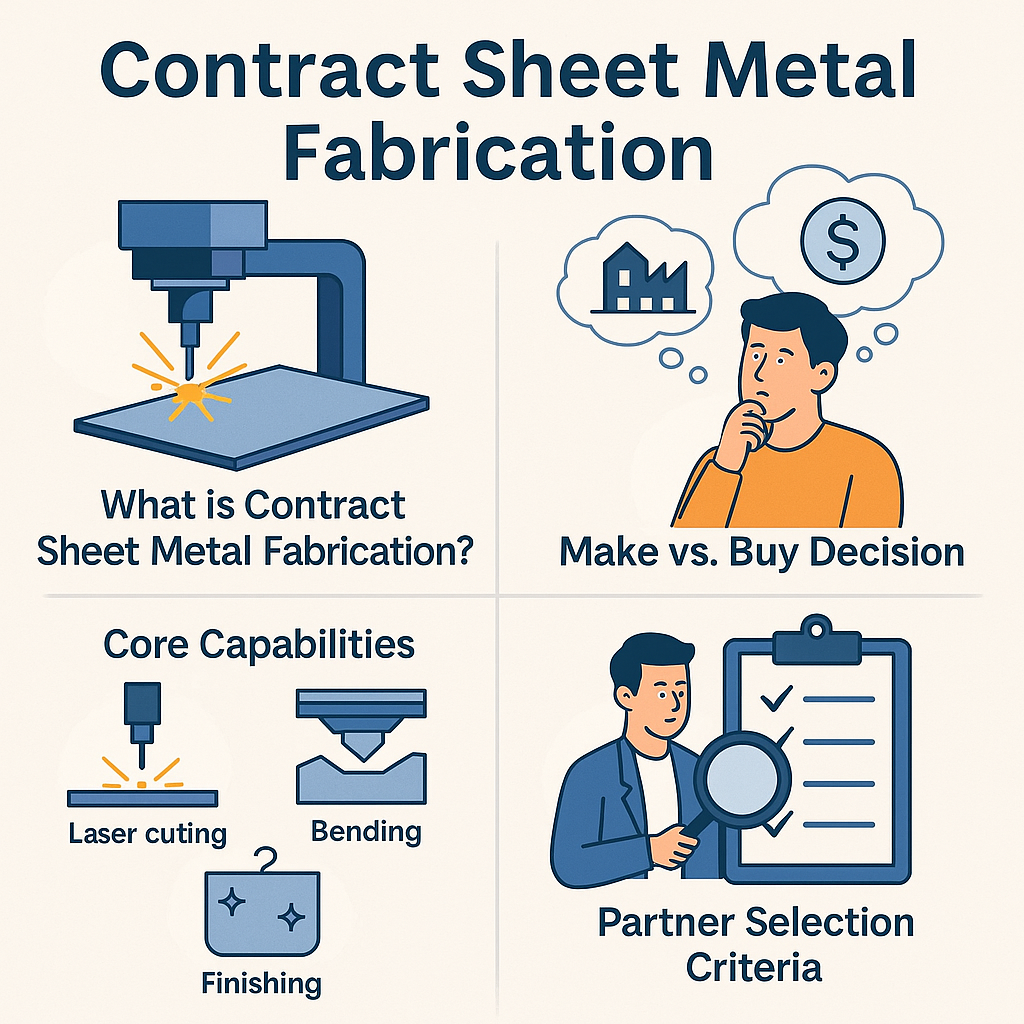 What is Contract Sheet Metal Fabrication?
Contract sheet metal fabrication is the outsourcing of metal component manufacturing to specialized fabrication companies. These contract manufacturers (often called “job shops” or “fab shops”) provide equipment, expertise, and manufacturing capacity to produce parts designed by the customer.
Core Capabilities Typically Include:
- Laser cutting: Automated laser cutting for precise part cutting from sheet metal
- CNC punching: Turret punch presses for high-speed hole punching and forming operations
- Press brake forming: CNC press brakes for precision bending of complex geometries
- Welding: MIG, TIG, robotic/cobot welding for assemblies requiring multiple components
- Hardware installation: PEM fasteners, rivets, spot welding for assembly integration
- Finishing: Automated powder coating, wet painting, plating, and surface treatments
Contract fabricators range from small single-location shops with 5–20 employees to large multi-facility manufacturers employing hundreds of workers across multiple states.
Make vs. Buy Decision Framework
Companies evaluate contract fabrication versus in-house manufacturing based on several factors:
When Contract Fabrication Makes Sense:
- Capital avoidance: Manufacturing equipment requires $500K–$5M+ investment. A fiber laser system alone costs $400K–$800K; CNC press brakes run $150K–$400K; powder coating lines require $200K–$500K. Contract fabrication converts capital expenditure to operating expense.
- Variable production volumes: In-house manufacturing requires consistent capacity utilization to justify fixed costs. Contract fabrication scales efficiently from prototype (1–10 pieces) through mid-volume production (100–5,000 pieces) without stranded capacity costs.
- Access to specialized capabilities: Robotic welding cells ($250K–$600K), automated powder coating lines, and precision inspection equipment represent investments most companies can’t justify for occasional use.
- Avoid workforce challenges: Skilled welders, laser operators, and CNC programmers are expensive to recruit ($50K–$80K+ annually) and difficult to retain. Contract fabricators maintain trained workforce year-round.
- Speed to market: Building internal fabrication capability requires 12–24 months for equipment procurement, installation, and workforce training. Contract fabricators provide immediate manufacturing capacity.
When In-House Manufacturing Makes Sense:
- Very high volumes: Production exceeding 50,000–100,000+ annual pieces often justifies capital investment and dedicated manufacturing lines.
- Proprietary processes: Unique manufacturing methods providing competitive advantage may warrant internal control.
- Extreme quality sensitivity: Aerospace, defense, or medical applications with zero-defect requirements sometimes require direct manufacturing oversight.
- Delivery integration: Just-in-time manufacturing requiring minute-by-minute coordination with assembly operations may necessitate internal fabrication.
Most companies find contract fabrication optimal for metal components and assemblies, reserving internal manufacturing for core differentiating capabilities only.
 Contract Fabricator Selection Criteria
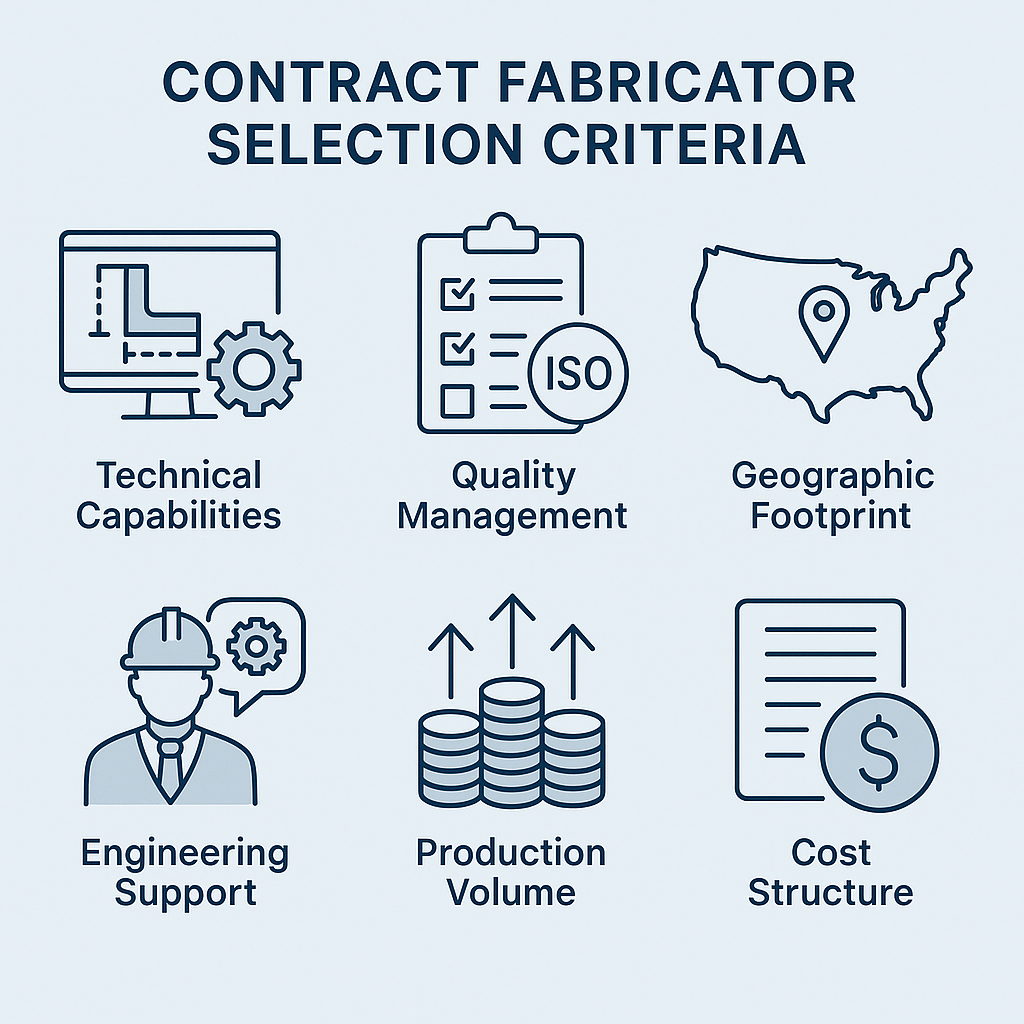 Contract Fabricator Selection Criteria
 Evaluating potential contract fabrication partners requires assessment across many dimensions:
1. Technical Capabilities and Equipment
Equipment Age and Technology: Modern fiber laser systems cut 2–3x faster than older CO2 lasers and handle reflective materials (aluminum, copper, brass) that older systems struggle with. CNC press brakes with offline programming and automatic tool changers reduce setup time 40–60% versus manual systems.
Capacity and Scalability: Manufacturers with multiple machines can accommodate production surges and provide backup capacity during maintenance. Single-machine shops create production bottlenecks and schedule inflexibility.
Secondary Services Integration: Fabricators offering welding, finishing, and hardware installation provide single-source convenience versus managing multiple suppliers. However, verify each capability’s quality — not all shops excel at everything.
2. Quality Management Systems
Certifications: ISO 9001:2015 demonstrates quality management system maturity with documented procedures, corrective action processes, and management review. Industry-specific certifications (AS9100 for aerospace, ISO 13485 for medical) indicate experience with regulated manufacturing.
Inspection Capabilities: CMM (coordinate measuring machine) inspection, optical comparators, and calibrated inspection equipment enable first article inspection and ongoing dimensional verification. Ask about inspection equipment capacity and calibration frequency.
Quality Performance Metrics: Request defect rates, on-time delivery performance, and customer satisfaction scores. Established manufacturers track these metrics systematically; evasive responses suggest quality issues.
3. Geographic Footprint and Logistics
Multiple Facility Locations: Multi-site manufacturers like EVS Metal provide geographic redundancy (disaster recovery, weather disruptions), regional logistics advantages (reduced shipping costs/transit time), and capacity flexibility. Single-location operations create geographic concentration risk.
Proximity vs. Capability Trade-offs: Local fabricators offer communication convenience and site visit accessibility. Distant fabricators may provide superior capabilities, quality systems, or pricing. Evaluate whether proximity provides meaningful operational value for your specific requirements.
Shipping and Logistics: Large manufacturers often negotiate favorable freight rates and maintain relationships with quality carriers. Ask about packaging capabilities, freight damage rates, and expedited shipping options.
4. Engineering and Design Support
Design for Manufacturability (DFM) Expertise: Experienced fabricators identify design issues causing manufacturing problems, quality defects, or unnecessary costs. DFM review should be standard practice during quoting, not an optional service.
Tolerance Analysis: Engineers who understand GD&T can recommend appropriate tolerance specifications — tighter than necessary increases costs 20–40% without functional benefit.
Material Selection Guidance: Fabricators working across industries can recommend optimal materials balancing cost, performance, and manufacturing considerations based on application requirements.
5. Production Volume Flexibility
Prototype Through Production: Manufacturers handling prototype (1–10 pieces), low-volume production (10–100), mid-volume (100–5,000), and higher volumes provide consistency across product lifecycle. Switching fabricators between prototype and production introduces quality and timeline risks.
Economic Order Quantities: Understand minimum economical batch sizes. High-mix, low-volume specialists efficiently produce small batches (10–50 pieces); high-volume manufacturers may struggle with setup economics below 500–1,000 pieces.
6. Industry Experience and References
Vertical Market Expertise: Fabricators serving your industry understand application requirements, typical specifications, and regulatory considerations. Medical device manufacturers need different expertise than agricultural equipment OEMs.
Customer References: Request 3–5 customer contacts in similar applications and production volumes. Ask references about communication quality, problem resolution, delivery performance, and cost competitiveness during annual negotiations.
Longevity and Financial Stability: Companies operating 20+ years demonstrate sustained market competitiveness. Request Dun & Bradstreet reports or financial references for large production commitments.
 Cost Structure and Pricing Models
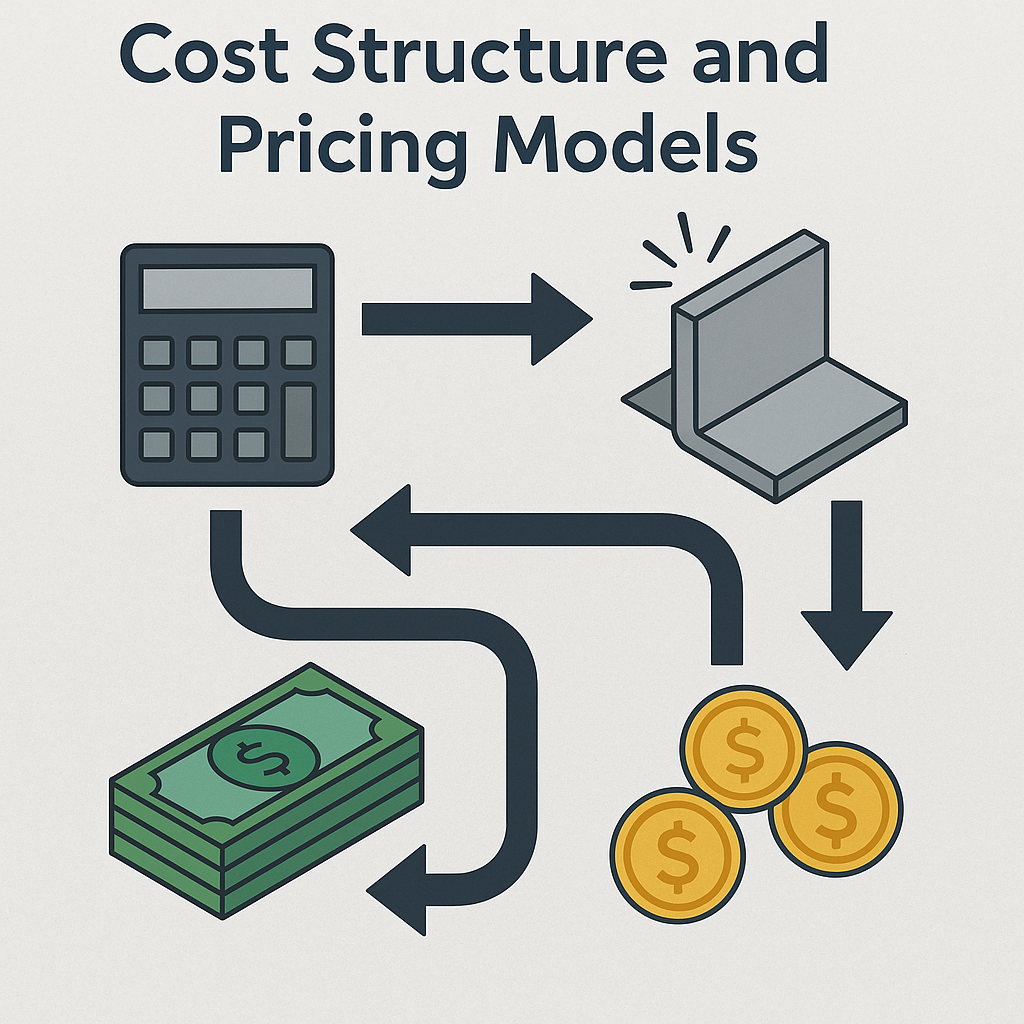 Cost Structure and Pricing Models
Understanding contract fabrication pricing enables better cost management and negotiation:
Material Costs (typically 30–40% of total): Raw material pricing based on sheet size, gauge, and material grade. Fabricators purchasing in bulk may offer lower material costs than customer-supplied material after handling charges.
Setup Costs (fixed per production run): Programming, machine setup, tooling preparation, and first article inspection. Setup costs spread across larger production quantities reduce per-piece costs significantly.
Runtime Costs (per-piece variable): Machine time, operator labor, and consumables (gases, tooling wear). Modern equipment reduces runtime costs through faster processing and automation.
Secondary Operations: Welding, hardware installation, finishing, and assembly add per-piece costs varying by complexity and specification requirements.
Cost Reduction Strategies:
- Design optimization: Reducing bends, eliminating tight tolerances on non-critical features, and standardizing hole sizes can significantly reduce manufacturing costs
- Volume consolidation: Combining many small orders into larger releases reduces setup cost allocation per piece
- Material standardization: Using common gauges and materials across products enables material inventory optimization and bulk purchasing leverage
- Annual pricing agreements: Long-term commitments often secure pricing advantages versus transactional quoting
Lead Time Expectations
Realistic lead time planning prevents schedule disruptions:
Quoting Phase: Complex assemblies requiring weld time estimation, finishing specifications, and DFM analysis need additional time for thorough evaluation. Simple flat patterns can often quote more quickly.
First Article Production: Initial production includes programming, tooling setup, first article inspection, customer approval, and production run. Complex assemblies with finishing require longer lead times than simple parts.
Repeat Production: Established parts with approved programs and proven tooling ship faster than first articles. Lead times vary based on part complexity and finishing requirements.
Expedite Capabilities: Established manufacturers can often accommodate rush requirements for premium charges. Frequent expedites signal planning problems; reserve expedited services for genuine emergencies.
Quality Assurance and Inspection
Professional contract fabricators implement comprehensive quality processes:
Incoming Material Inspection: Certificate of conformance verification, material grade confirmation, and dimensional verification of sheet stock ensure material conformance before manufacturing begins.
First Article Inspection (FAI): Complete dimensional verification of initial production pieces with detailed inspection reports documenting conformance to drawings. AS9102 forms for aerospace applications; similar rigor for other industries.
In-Process Inspection: Periodic checks during production runs verify dimensional stability, tool wear monitoring, and process control. Frequency based on production quantity and part criticality.
Final Inspection: Visual inspection for damage, dimensional verification of critical features, and functional checks (fit testing, hardware installation verification) before packaging and shipment.
Nonconformance Management: Documented processes for identifying, containing, and correcting quality issues. Root cause analysis and corrective action prevent recurrence.
 Communication and Project Management
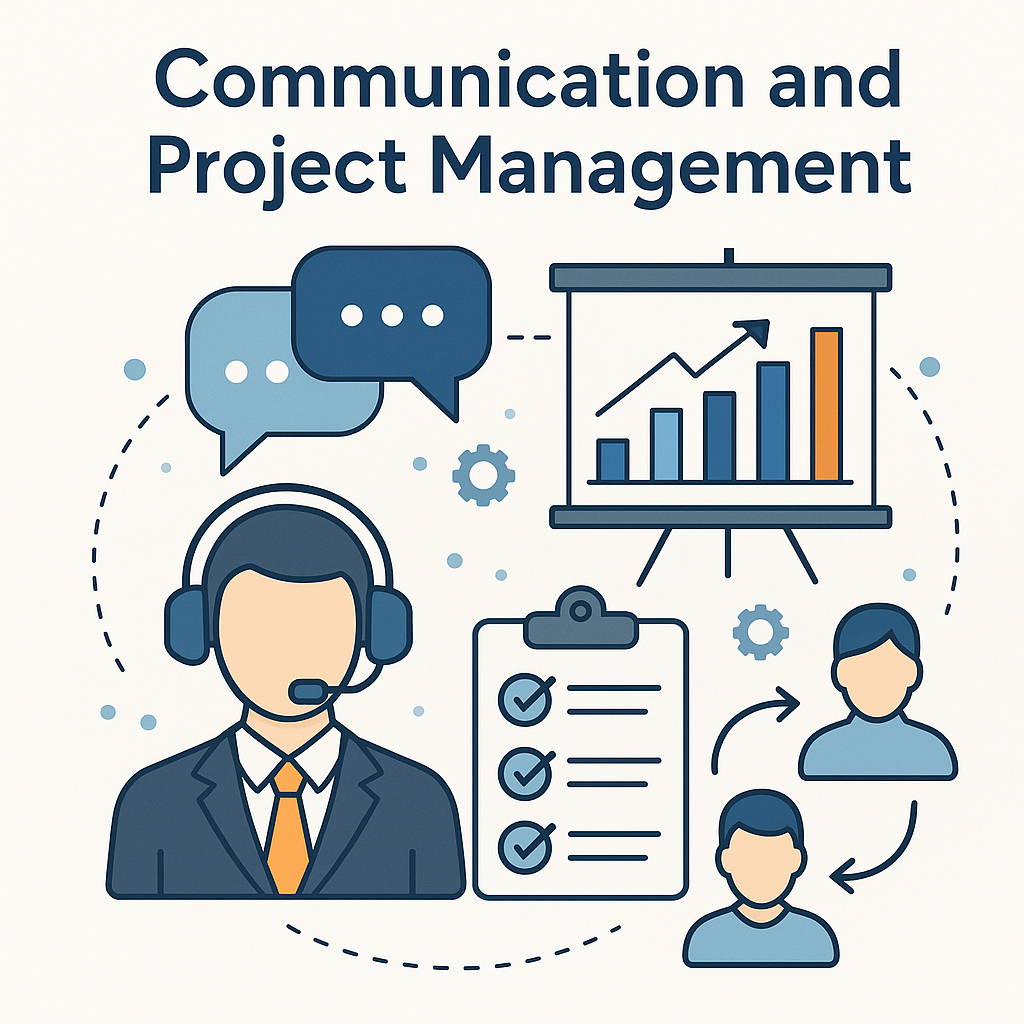 Communication and Project Management
Effective fabrication partnerships require strong communication infrastructure:
Dedicated Project Management: Account representatives and project managers providing single point of contact for quotes, orders, and production updates. Avoid shops where you communicate with different people for each transaction.
Production Visibility: Regular status updates on active orders including shipping schedules. Online portals providing real-time production status represent best practice.
Engineering Accessibility: Direct communication with engineers for DFM discussions, tolerance questions, and manufacturing problem solving. Engineering access typically separates sophisticated fabricators from basic job shops.
Problem Resolution: Responsive escalation processes for quality issues, delivery concerns, or specification questions. Evaluate responsiveness during quoting phase — future communication will mirror initial experience.
Risk Management and Business Continuity
Mitigating supply chain risks requires evaluation of fabricator stability:
Financial Stability: Long-term production commitments require confidence in fabricator’s financial health. Companies operating 15+ years demonstrate market viability; request financial references for major production contracts.
Capacity Planning: Understand fabricator’s customer concentration — shops with 1–2 customers representing >50% of revenue face business risk if major customers reduce volumes. Diversified customer base indicates stability.
Disaster Recovery: Multi-facility manufacturers provide geographic redundancy if one location faces disruption (weather, equipment failure, workforce issues). Single-location operations create concentration risk.
Intellectual Property Protection: NDAs, controlled access to engineering files, and documented IP policies protect proprietary designs. Verify data security practices for digital files.
EVS Metal’s Contract Fabrication Capabilities
EVS Metal operates as a high-mix, mid-volume contract sheet metal fabricator serving OEMs and product manufacturers across industries:
Multi-Facility Network: Four manufacturing locations (New Jersey, Texas, Pennsylvania, New Hampshire) totaling 200,000+ square feet of climate-controlled manufacturing space. Geographic diversity provides production flexibility and regional logistics advantages.
Industry Recognition: FAB 40 ranked for 16 consecutive years — consistent recognition as one of North America’s top 40 metal fabrication companies.
Advanced Equipment: Fiber laser cutting systems, robotic welding cells, automated powder coating lines, CNC press brakes with offline programming, and comprehensive inspection equipment supporting complex assembly manufacturing.
Quality Systems: ISO 9001:2015 certified quality management with documented procedures, corrective action processes, and management review. ITAR registration (Texas facility) for defense-related manufacturing.
Engineering Support: In-house engineering team providing DFM analysis, tolerance optimization, material selection guidance, and manufacturing problem solving from quote through production.
Production Flexibility: Prototype through mid-volume production (1–5,000+ pieces) with economic efficiency across volume ranges. High-mix manufacturing experience serving diverse industries and applications.
Evaluating contract fabrication for your metal components? Request a quote to discuss your manufacturing requirements and project specifications, or call EVS Metal at (973) 839-4432.
Frequently Asked Questions
What is contract sheet metal fabrication?
Contract sheet metal fabrication is the outsourcing of metal parts and assemblies to specialized fabrication companies. These partners provide the equipment, expertise, and labor to laser cut, form, weld, finish, and assemble components designed by OEMs and product manufacturers.
When does contract fabrication make more sense than in-house manufacturing?
Contract fabrication usually makes more sense when you want to avoid large capital investments, have variable or mid-volume production, need access to specialized capabilities (like fiber lasers, robotic welding, or automated powder coating), or want to sidestep hiring and retaining skilled fabrication staff.
What’s the minimum order quantity for contract fabrication?
Minimum order quantities vary by fabricator and part complexity. Some shops are optimized for prototypes and low volume (as few as 1–10 pieces), while others focus on higher volumes. It’s best to discuss your typical batch sizes and annual volumes up front to ensure alignment.
How much does contract fabrication cost compared to in-house manufacturing?
A fair comparison must include more than just quoted piece price. In-house manufacturing carries equipment depreciation, maintenance, facilities, staffing, and utilization risk. Contract fabrication converts those fixed costs into variable costs and is often more economical for low to mid-volume work, while very high volumes may justify in-house lines.
Can contract fabricators handle proprietary or confidential designs?
Yes. Established contract fabricators routinely manufacture proprietary parts under non-disclosure agreements. Look for shops with documented IP protection policies, secure handling of digital files, controlled access to engineering data, and employee confidentiality agreements.
What lead time should I expect for first-time orders?
First-time orders require time for quoting, programming, tooling, and first article inspection. Complex welded and finished assemblies take longer than simple flat parts. Once programs and tooling are approved, repeat orders typically ship faster. Discuss lead-time expectations during the quoting stage.
How can I evaluate a contract fabricator’s quality without visiting the facility?
Ask for recent first article inspection reports, customer references in similar applications, and proof of certifications such as ISO 9001:2015. Review their inspection equipment list and how often it is calibrated. These indicators provide a good view of quality performance without an on-site audit.
Should I use one contract fabricator or multiple suppliers?
Using multiple suppliers provides price competition and redundancy but increases management overhead. Single-source partnerships simplify logistics and often lead to deeper engineering collaboration and better long-term cost control. Many OEMs use two to three primary fabricators to balance resilience and relationship depth.
What information do I need to provide for an accurate fabrication quote?
For accurate quoting, provide part drawings or CAD files, material specifications, quantities per order, estimated annual volume, finish requirements, and any special quality or inspection needs. Context about the application and truly critical tolerances helps the fabricator optimize cost and manufacturability.
How do volume discounts typically work in contract sheet metal fabrication?
Volume discounts mainly come from spreading setup costs over more pieces and leveraging material purchases. Larger batch sizes or annual volume commitments reduce per-piece cost. Combining releases or standardizing materials across part numbers can also improve pricing and scheduling efficiency.