

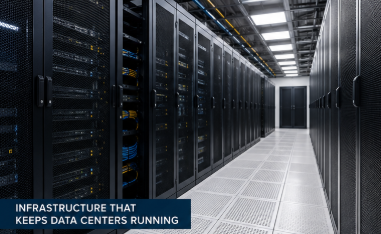
 Data center infrastructure is growing more complex. Higher-density requirements, changing infrastructure designs, installation complexity, and tightening supply chains mean OEMs and infrastructure suppliers cannot afford delays, quality problems, or fabrication partners that treat infrastructure components as commodity parts. Behind the servers, networking equipment, power systems, and cooling equipment are fabricated metal parts that support, protect, organize, mount, and integrate the equipment that keeps facilities running.
For OEMs, infrastructure suppliers, and industrial technology companies, relatively small issues involving fit, finish, hardware placement, or revision control can affect assembly, installation, serviceability, and production schedules. Buyers therefore need fabrication partners that can support manufacturable designs, repeatable production, coordinated finishing and assembly, clear production controls, and reliable delivery.
EVS Metal supports data center and industrial technology applications with precision sheet metal fabrication capabilities across multiple U.S. facilities. Depending on the customer’s drawings and program requirements, that work may include complete racks, rack components, enclosures, frames, panels, brackets, trays, doors, covers, welded assemblies, hardware-inserted parts, powder coated components, and light assemblies.
Why Data Center Infrastructure Fabrication Is More Demanding Than It Looks
At first glance, many data center infrastructure components may appear straightforward. A panel is a panel. A bracket is a bracket. A rack frame is a set of formed and assembled metal parts. In production, however, those parts often need to interface with larger systems, repeated installation patterns, customer-supplied hardware, electrical or technology equipment, and field-service requirements. Precision, documentation, and process control therefore matter far more than the part geometry alone may suggest.
A rack component may require consistent hole patterns so equipment mounts correctly. An enclosure panel may need accurate hardware locations and a finish that withstands handling and installation. A bracket may need to maintain alignment without interfering with adjacent components, while a tray, cover, or door may need to balance durability, access, airflow, appearance, and assembly requirements. The real test is not whether a fabricator can make one acceptable prototype. It is whether the fabricator can reproduce the part, manage revisions, coordinate finishing and assembly, protect it during shipment, and deliver it according to the production schedule.
Common Fabricated Components Used in Data Center Infrastructure
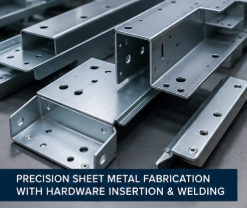 Data center infrastructure programs often involve a broad range of sheet metal products rather than one component type. Common applications may include:
- Computer racks and server rack components
- Equipment racks and infrastructure frames
- Panels, doors, covers, and trays
- Brackets, supports, and mounting components
- Enclosures and enclosure components
- Welded assemblies
- Hardware-inserted sheet metal parts
- Powder coated steel and aluminum components
- Light mechanical assemblies and integrated components
Some of these parts may be relatively simple formed components, while others require coordinated manufacturing across cutting, forming, welding, hardware insertion, powder coating, assembly, inspection, and logistics. That coordination becomes especially important for repeat programs, multi-part assemblies, and infrastructure projects with changing release schedules.
The Manufacturing Risks Buyers Should Watch
When sourcing fabricated components for data center infrastructure, the lowest piece price does not always represent the lowest program risk. Buyers should look closely at the manufacturing steps most likely to create delays, rework, or hidden cost.
- Incomplete drawings or unclear specifications
- Tight bend geometry that is difficult to form consistently
- Hole patterns or mounting features that shift after forming
- Hardware requirements that are not reviewed before production
- Powder coating requirements that overlook masking, threads, grounding points, or mating surfaces
- Welded assemblies that require additional fit or cosmetic review
- Revision changes that are not clearly controlled
- Packaging that does not protect finished surfaces
- Lead times that do not account for material, finishing, assembly, and inspection
These issues are not exclusive to data center work, but their consequences can be larger when the parts support a broader infrastructure program. A delayed or out-of-revision component can affect installation sequences, customer commitments, and downstream production, which is why buyers should evaluate a fabrication partner’s full process rather than focusing only on its equipment list.
Material Selection: Steel, Aluminum, and Program Requirements
Steel and aluminum are both commonly used for data center infrastructure components. The right choice depends on strength requirements, weight, finish expectations, installation conditions, and downstream assembly needs, along with forming requirements, hardware insertion, weldability, cost, and lead time.
Steel may be preferred when rigidity, durability, or structural support are priorities, while aluminum may be useful when weight reduction, corrosion resistance, or easier handling matter more. A heavy-duty frame may require the strength and stiffness of steel, for example, while a removable panel, cover, or tray may benefit from aluminum. Components that will be powder coated may also need additional review for finish adhesion, masking, grounding, and mating surfaces.
EVS works with both steel and aluminum components for data center infrastructure applications. Its engineering and fabrication teams can help customers evaluate how material decisions affect manufacturability, cost, finish, lead time, and repeatability.
Powder Coating and Finish Requirements
Many fabricated data center components are powder coated for durability, appearance, and protection. Typical applications include racks, panels, doors, covers, trays, brackets, frames, and enclosures. Specifying powder coating requirements clearly is important. Drawings and purchase documentation should define:
- Color, gloss, and texture
- Required film thickness
- Masking requirements
- Exposed and cosmetic surfaces
- Mating surfaces
- Threaded areas
- Grounding points
- Areas that should remain uncoated
Because coating buildup can affect fit and assembly, finishing should be considered during design and quoting rather than after fabrication is complete. When finishing is outsourced, another supplier, transport step, and communication handoff enter the production path. EVS offers in-house powder coating, allowing components to move from fabrication and hardware insertion into finishing without leaving the manufacturing operation, which can improve schedule coordination, quality visibility, and accountability.
Hardware Insertion, Welding, and Light Assembly
Data center infrastructure components often require more than cut and formed sheet metal. Many parts include hardware insertion, welded features, fasteners, hinges, mounting points, or light assembly before shipment. Hardware-inserted components can reduce downstream assembly work, but only when fasteners are installed correctly, protected during finishing, and inspected before shipment. A missing or incorrectly installed fastener may not be discovered until final assembly, after the part has already been coated or delivered.
Welded assemblies require similar coordination. Weld access, distortion, load requirements, cosmetic expectations, and downstream fit should be reviewed before production, and welding may need to be sequenced carefully with forming, hardware insertion, finishing, and packaging. Depending on the project, EVS can support hardware installation, welded subassemblies, mechanical assembly, and preparation for final customer integration.
Engineering and DFM Support for Data Center Components
Many data center infrastructure components are part of larger systems, which means early design decisions can affect manufacturing cost, lead time, assembly, and repeatability. Engineering and design-for-manufacturing support can help identify issues before production begins by reviewing bend feasibility, hole placement, mounting features, hardware locations, weld access, material selection, finishing, tolerances, packaging, and assembly.
For data center components, DFM review may address questions such as:
- Will mounting holes and hardware locations remain accurate after forming?
- Are bend radii, flange lengths, and material thickness appropriate for repeat production?
- Does the drawing define coating, masking, and grounding requirements clearly?
- Could any features interfere with rack assembly, access, installation, or serviceability?
- Can the component be packaged without damaging finished surfaces?
- Does the design support future releases or repeat production runs?
These questions are easier and less expensive to resolve before parts are cut, formed, welded, coated, or assembled. EVS works with customers during quoting and engineering review to identify manufacturability concerns early and reduce avoidable production delays, quality issues, and cost surprises.
Repeatability, Revision Control, and Schedule Reliability
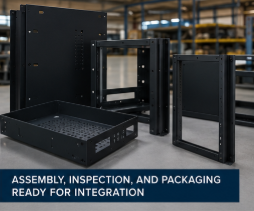 For repeat and multi-part infrastructure programs, consistency depends on more than final inspection. It requires accurate quoting, current documentation, material control, revision management, production planning, in-process checks, and communication between departments. A customer may need the same rack component, enclosure panel, bracket, tray, or cover produced across multiple releases. If the drawing revision, hardware requirements, material, finish, or packaging details are not controlled, each new release can recreate the same operational problems.
EVS uses manufacturing systems and production processes that connect estimating, purchasing, job routing, scheduling, fabrication, finishing, assembly, inspection, and shipping. For customers with recurring demand, inventory management for repeat fabrication programs and production visibility help support more predictable production flow. These controls also affect delivery performance. When documentation, material planning, and production visibility are weak, buyers are more likely to absorb costs through delayed installations, rushed expedites, rework, or disrupted customer commitments. That is why evaluating a fabricator solely on piece price can create a false economy. The more useful question is whether the supplier has the systems and capacity to deliver the correct parts, to the correct revision, within a realistic schedule.
Why Multi-Facility Capacity Matters
Data center infrastructure programs vary in volume, complexity, and timing. Some involve small quantities of specialized components, while others require repeat production, multi-part assemblies, or ongoing support across multiple releases. A broader manufacturing footprint can provide additional flexibility when capacity needs change or schedules compress, and it can help align work with the facility best suited to the required processes, volume, and location. EVS operates four manufacturing facilities in New Jersey, Texas, Pennsylvania, and New Hampshire.
Data center infrastructure work can be supported across the network, with smaller quantities typically handled in New Hampshire and other requirements aligned with the facility whose capabilities and capacity best match the program. This structure gives EVS additional flexibility when customers need support for volume changes, compressed timelines, or facility-specific requirements.
What to Ask a Fabrication Partner About Data Center Infrastructure Work
Before selecting a fabrication partner, buyers should ask questions that reveal how the work will actually move through production.
- Have you produced racks, enclosures, panels, brackets, frames, or similar infrastructure components? The answer should include specific examples and explain how the fabricator handled finishing, hardware, revision control, or repeat production.
- Can you support both steel and aluminum fabrication? The fabricator should be able to explain how material choice affects forming, finishing, cost, and lead time.
- Is powder coating performed in-house or outsourced? If it is outsourced, ask how the handoff, schedule, masking requirements, and coating issues are managed.
- Can you support hardware insertion, welding, and light assembly? Ask how those steps are inspected and protected during finishing and packaging.
- How are drawings reviewed for manufacturability? The answer should address when engineering review occurs and what types of issues are typically identified.
- How are revisions managed for repeat or multi-part programs? Ask how the current revision is identified and how outdated drawings are prevented from reaching production.
- Which facility would support the work? The answer should reflect the project’s volume, required processes, location, and timing.
- How are potential lead-time issues communicated? Communication should happen when a risk is identified, not after the job is already late.
Specific answers indicate that the fabricator understands its production process. Vague answers or unclear controls around revisions, finishing, and communication are reasons to investigate further.
How EVS Supports Data Center Infrastructure Fabrication
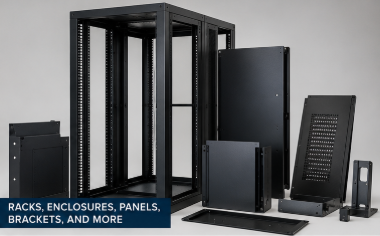 EVS does not build data centers or manufacture servers. Its role is to support the fabricated metal infrastructure used by OEMs, equipment manufacturers, and infrastructure suppliers serving the data center and industrial technology markets. Depending on the customer’s drawings and program requirements, that support may include complete racks, rack components, enclosures, panels, brackets, frames, trays, welded assemblies, powder coated parts, hardware-inserted components, and light assemblies.
The things outlined above—manufacturability review, in-house finishing, revision control, production visibility, engineering support, and multi-facility capacity—are not just theory. They are built into how EVS actually works. Bringing these capabilities together under one manufacturing partner reduces handoffs and gives customers clearer accountability across production.
Work With EVS Metal
EVS Metal provides precision sheet metal fabrication, finishing, hardware insertion, welding, and light assembly for data center and industrial technology infrastructure applications. With four U.S. manufacturing facilities and a broad range of in-house capabilities, EVS supports customers that need reliable production across individual components, repeat programs, and multi-part assemblies.
To discuss a data center infrastructure fabrication project, request a quote or contact us for more information.
FAQ
What types of data center infrastructure components does EVS Metal fabricate?
EVS fabricates steel and aluminum components including computer racks, server rack components, equipment racks, enclosures, frames, panels, brackets, doors, covers, trays, welded assemblies, hardware-inserted parts, powder coated components, and light assemblies.
Does EVS Metal make complete computer racks or only rack components?
EVS can support complete computer racks as well as individual rack components, depending on the customer’s drawings, production requirements, and assembly scope.
What materials are commonly used for data center infrastructure fabrication?
Steel and aluminum are both commonly used. The right material depends on strength, weight, finish requirements, installation conditions, and the overall manufacturing process.
Are data center infrastructure components usually powder coated?
Many are powder coated for durability, appearance, and protection. Drawings should clearly define color, gloss, texture, film thickness, masking, grounding points, and any surfaces that must remain uncoated.
Why does in-house powder coating matter?
In-house powder coating reduces handoffs and gives the fabricator more direct control over scheduling, masking requirements, inspection, and quality.
Can EVS Metal provide assembly for data center infrastructure components?
Yes. EVS supports light assembly, hardware insertion, and welded assemblies for data center and related industrial technology components.
How does manufacturing discipline affect schedule reliability?
Clear documentation, revision control, material planning, production visibility, and coordinated manufacturing all affect whether the correct parts arrive when expected.
Which EVS facilities support data center infrastructure work?
EVS can support this work across its facilities in New Jersey, Texas, Pennsylvania, and New Hampshire. Projects are generally aligned with the facility whose capacity and capabilities best match the program.
Does EVS Metal build data centers or servers?
No. EVS supports OEMs, equipment manufacturers, and infrastructure suppliers with the fabricated metal components and assemblies used in data center infrastructure.