

Metal fabrication is the manufacturing process that transforms flat sheet metal into functional components, assemblies, and finished products. From simple brackets and enclosures to complex weldments and electromechanical assemblies, metal fabrication encompasses the techniques, equipment, and expertise required to convert raw material into precision-engineered parts.
Understanding metal fabrication matters whether you’re sourcing components for a new product, evaluating manufacturing partners, or deciding between fabrication approaches. This guide defines what precision sheet metal fabrication is, how it works, which processes create different results, and why integrated fabrication capabilities deliver better outcomes than fragmented manufacturing.
In This Guide
- What metal fabrication is and how it works
- Core fabrication processes (cutting, forming, machining, welding)
- Materials used in precision sheet metal manufacturing
- Value-added metal fabrication services (finishing, assembly, integration)
- Integrated vs. fragmented manufacturing
- How to choose a fabrication partner
- Industry applications
 Understanding Metal Fabrication: Definition and Scope
Metal fabrication is the controlled removal, reshaping, or joining of sheet metal to create specified geometries and assemblies. The process begins with flat sheet material—typically steel, stainless steel, or aluminum—and applies various manufacturing operations to produce components that meet exact dimensional, functional, and aesthetic requirements.
Modern metal fabrication combines traditional metalworking techniques with advanced computer-controlled equipment, robotics, and digital manufacturing systems. This integration enables precision measured in thousandths of an inch, repeatability across thousands of parts, and manufacturing efficiency impossible with manual methods.
Primary Materials in Sheet Metal Fabrication
Steel (Cold Rolled and Hot Rolled)
Steel provides high strength at economical cost, making it the workhorse material for structural components, frames, and applications requiring load-bearing capacity. Cold-rolled steel offers tighter tolerances and better surface finish than hot-rolled alternatives. Steel requires protective finishing (powder coating, plating, or painting) to prevent corrosion.
Stainless Steel (304, 316, 430)
Stainless steel resists corrosion without additional finishing, maintains aesthetic appeal, and provides good strength characteristics. Type 304 serves general-purpose applications. Type 316 offers superior corrosion resistance for marine or chemical environments. Type 430 provides magnetic properties when required. Stainless costs more than carbon steel but eliminates finishing requirements for many applications.
Aluminum (5052, 6061)
Aluminum delivers excellent strength-to-weight ratio, natural corrosion resistance, good thermal conductivity, and easier machining than steel. Alloy 5052 excels in forming applications. Alloy 6061 provides higher strength for structural uses. Aluminum’s lighter weight makes it ideal for applications where mass matters—aerospace components, transportation equipment, portable products.
Galvanized Steel
Steel with zinc coating provides corrosion protection at lower cost than stainless steel. Common in outdoor enclosures, HVAC equipment, and applications exposed to weather but not requiring stainless steel’s corrosion resistance or appearance.
Material selection affects fabrication processes, lead times, costs, and product performance. Engineers evaluate strength requirements, operating environment, weight constraints, aesthetic needs, and budget to specify appropriate materials.
Core Metal Fabrication Processes
Metal fabrication encompasses multiple process categories, each serving specific purposes in transforming sheet metal into finished components.
Cutting Processes: Precision Material Shaping
Cutting operations separate material from sheet metal to create profiles, holes, and geometric features. In modern precision fabrication environments, fiber laser cutting serves as the primary cutting technology, delivering unmatched speed, accuracy, and edge quality.
Fiber Laser Cutting (Primary Technology)
Fiber laser cutting uses high-energy light beams to melt and vaporize material along programmed tool paths. Compared to older CO₂ systems and mechanical cutting methods, fiber lasers provide:
- Faster cutting speeds
- Tighter dimensional tolerances
- Minimal heat-affected zones
- Lower operating costs
- Superior edge quality
Fiber laser systems efficiently process thin-gauge precision components, heavy-gauge structural parts, stainless steel, aluminum, and carbon steel. Modern fiber platforms can cut steel up to industrial plate thicknesses while maintaining precision measured in thousandths of an inch.
EVS Metal operates multiple high-power fiber laser systems—including advanced Amada platforms capable of processing both precision thin-gauge parts and heavy plate components—enabling rapid turnaround and consistent repeatability across production runs.
Turret Punching (High-Volume Efficiency)
CNC turret punch presses excel in high-volume production of parts with repetitive hole patterns and standardized features. For electrical enclosures, mounting plates, and bracket components, turret punching delivers exceptional speed and cost efficiency.
Modern turrets hold dozens of tool stations, automatically selecting and positioning appropriate dies for each feature. Turret punching works best on thinner materials (typically under 0.25 inches) and creates specific hole sizes based on available tooling.
Turret punching is most effective for:
- Thinner materials
- Standard hole geometries
- High-volume production runs
Plasma Cutting (Heavy-Duty Applications)
Plasma cutting uses electrically ionized gas accelerated through a constricted nozzle to melt and blow away material. Plasma cutting is typically used in heavier structural applications where edge finish is less critical than cutting speed. While capable of processing thicker materials quickly, plasma produces wider kerfs and rougher edges compared to fiber laser systems.
In precision-driven fabrication environments, fiber laser technology is the dominant cutting method for most sheet metal applications.
CNC Machining: Precision Material Removal
CNC machining operations use computer-controlled cutting tools to remove material with precision impossible in sheet metal cutting alone. Machining creates features like threaded holes, counterbores, precision pockets, and tight-tolerance surfaces.
Milling
Milling uses rotating multi-point cutting tools to remove material from stationary workpieces. CNC mills create flat surfaces, pockets, slots, complex 3D contours, and precision features in fabricated parts. Horizontal and vertical milling centers handle different part geometries.
Drilling and Tapping
Drilling creates round holes. Tapping cuts internal threads for fasteners. CNC control ensures precise hole location, diameter, and thread specifications across production runs. Combination drilling and tapping operations increase efficiency by completing multiple features without workpiece repositioning.
Turning
CNC lathes rotate workpieces while cutting tools remove material to create cylindrical features—shafts, bushings, precision bores. Turning complements sheet metal fabrication when components require cylindrical features beyond punching or drilling capabilities.
Forming: Reshaping Without Material Removal
Forming operations apply controlled force to bend, shape, or deform sheet metal without removing material. Forming processes create three-dimensional shapes from flat sheet stock.
 Press Brake Bending
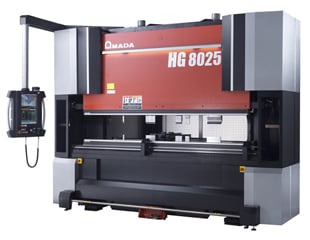 Press Brake Bending
Press brakes apply tonnage through upper tooling (punches) against lower tooling (dies) to bend sheet metal at precise angles. Modern CNC press brakes control bend angle, position, and force with high accuracy.
Bending creates flanges, channels, enclosure sides, brackets, and structural shapes. Skilled operators and proper tooling selection ensure accurate bends without cracking, marking, or dimensional deviation.
Large part forming requires specialized equipment with extended bed lengths and high tonnage capacity for components several feet long.
Robotic Bending
Automated bending systems combine CNC press brakes with robotic material handling for consistent, repeatable forming operations. Robotic bending delivers precise angle control across production runs, faster cycle times than manual operations, and consistent quality eliminating operator variation.
Robotic bending systems excel in medium to high-volume production where repeatability and efficiency justify automation investment. These systems handle complex bending sequences, multiple-angle parts, and high-mix production environments.
Specialized Forming Processes
Roll forming and other continuous forming processes suit specific applications like long parts with consistent cross-sections, though most precision sheet metal fabrication relies on press brake and robotic bending for flexibility and setup efficiency.
Welding: Permanent Joining
Welding fuses metal components into permanent assemblies. Multiple welding processes serve different applications, material combinations, and quality requirements.
TIG Welding (GTAW)
Tungsten Inert Gas welding uses non-consumable tungsten electrodes to create precise, clean welds. TIG excels at thin materials, stainless steel, aluminum, and applications requiring aesthetic weld appearance. Skilled TIG welders produce high-quality welds on complex assemblies, critical joints, and components where weld appearance matters.
MIG Welding (GMAW)
Metal Inert Gas welding feeds consumable wire electrode continuously, enabling faster welding speeds than TIG. MIG suits thicker materials, high-volume production, and applications where speed matters more than aesthetic perfection. MIG welding balances quality and productivity for structural assemblies, frames, brackets, and components where welds don’t face end users.
Robotic Welding
Robotic welding systems deliver consistent quality, perfect repeatability, and faster cycle times than manual welding. Robots execute programmed weld paths with precision impossible for human operators to maintain across thousands of parts. Robotic welding suits medium to high-volume production where consistent weld quality justifies automation investment.
Spot Welding
Spot welding joins sheet metal by applying pressure and electrical current at specific points. Fast and efficient for joining multiple layers, spot welding serves chassis assembly, enclosure construction, and applications requiring numerous attachment points.
Value-Added Metal Fabrication Services
Raw fabricated components often require additional processes before becoming finished products ready for use or assembly into larger systems.
Metal Finishing
Finishing protects fabricated parts from corrosion, wear, and environmental damage while providing aesthetic appeal and functional surface properties.
 Powder Coating
 Powder Coating
Powder coating applies electrostatically charged powder particles that fuse under heat to create durable, uniform coatings. Powder coating provides excellent corrosion protection, impact resistance, and appearance in virtually any color. In-house powder coating capabilities eliminate outsourcing delays and quality control issues.
Plating and Anodizing
Electroplating deposits thin metal layers (zinc, chrome, nickel) for corrosion protection or aesthetic purposes. Anodizing creates oxide layers on aluminum surfaces, improving corrosion resistance and enabling color options. These processes typically require specialized facilities and environmental controls.
Painting and Silk Screening
Liquid painting provides color options and corrosion protection, particularly for large assemblies difficult to powder coat. Silk screening applies logos, labels, and graphics directly to metal surfaces for product branding and information display.
Assembly and Integration
Complex products comprise multiple fabricated components joined into complete assemblies. Full-service fabricators offer assembly and integration services that transform individual parts into finished products.
Mechanical Assembly
Joining fabricated components using fasteners (screws, bolts, rivets), adhesives, or press-fit connections. Assembly services include hardware insertion, sub-assembly construction, and final product assembly.
Electromechanical Integration
Installing electronic components, wiring harnesses, circuit boards, fans, switches, and displays into fabricated enclosures. Integration services transform sheet metal enclosures into functional equipment ready for end use.
Testing and Quality Validation
Assembled products often require functional testing, electrical verification, or performance validation before shipment. Integrated fabricators with assembly capabilities can perform these quality checks, ensuring products leave the facility fully functional.
Supply Chain and Logistics Support
Manufacturing extends beyond the shop floor. Leading fabricators provide supply chain services that simplify customer operations and reduce total cost of ownership.
Inventory Management
Storing finished products or component inventory reduces customer warehousing requirements and enables just-in-time delivery. Consignment inventory programs allow customers to draw stock as needed without large upfront purchases.
Kitting and Packaging
Grouping related components into kits for assembly elsewhere or packaging products for retail sale. Custom packaging protects products during shipping and can include branding elements for direct-to-consumer products.
Shipping and Delivery
Coordinating transportation from fabrication facility to customer locations, whether across town or internationally. Full-service fabricators manage freight logistics, documentation, and delivery timing.
Modern Manufacturing Technologies in Metal Fabrication
Advanced technologies continue transforming metal fabrication capabilities, efficiency, and precision.
Computer-Aided Manufacturing (CAM)
CAM software converts design files directly into machine programs, eliminating manual programming and reducing setup time. Direct CAD-to-machine workflows ensure fabricated parts match design specifications exactly.
Automation and Robotics
Beyond robotic welding, automation appears throughout modern fabrication facilities. Automated material handling moves sheet metal between processes. Robotic bending systems form parts with consistent accuracy. Automated deburring removes sharp edges without manual finishing. Collaborative robots (cobots) work alongside human operators, combining automation efficiency with human judgment for complex assemblies.
Industry 4.0 and Digital Manufacturing
Industry 4.0 integration connects machines, systems, and processes through digital networks. Real-time production monitoring, predictive maintenance, and data-driven process optimization improve efficiency and quality. Digital manufacturing enables capabilities like digital twins (virtual production simulations), predictive quality control, and automated production scheduling.
Applications: Where Metal Fabrication Matters
Metal fabrication serves virtually every industry requiring durable, precision-manufactured components.
Industrial Equipment and Machinery
Frames, guards, enclosures, control panels, and structural components for manufacturing equipment, material handling systems, and industrial machinery. Metal fabrication provides the structural foundation for equipment that produces other products.
Electronics and Telecommunications
Equipment enclosures, server racks, telecommunications cabinets, and electronic chassis. Fabricated enclosures protect sensitive electronics from environmental damage, provide EMI/RFI shielding, and enable proper thermal management.
Medical Devices
Surgical instrument housings, diagnostic equipment enclosures, hospital furniture, and sterile processing equipment. Medical device fabrication requires compliance with FDA regulations, stringent quality standards, and often specialized materials resistant to repeated sterilization.
Aerospace and Defense
Structural components, equipment mounting systems, electronics enclosures, and specialized assemblies for aircraft, spacecraft, and defense systems. ITAR-registered fabricators handle controlled defense-related manufacturing.
Automotive and Transportation
Body panels, structural reinforcements, mounting brackets, and trim components for vehicles, trains, and transportation equipment. High-volume automotive applications often require dedicated tooling and automated production lines.
Architecture and Construction
Decorative metalwork, structural supports, cladding systems, and architectural elements. Architectural fabrication emphasizes aesthetic finish quality alongside structural performance.
Integrated vs. Fragmented Manufacturing: Why It Matters
Metal fabrication projects can follow two paths: integrated manufacturing where one provider handles all operations, or fragmented manufacturing where multiple vendors each perform separate processes.
The Integrated Fabrication Advantage
Single-Source Accountability
When cutting, forming, machining, welding, finishing, and assembly occur under one roof, customers work with a single point of contact. Quality issues, timeline questions, and design changes go through one provider rather than coordinating between multiple vendors.
Faster Lead Times
Eliminating transportation between separate facilities, scheduling coordination across vendors, and handoff delays between operations compresses project timelines significantly. Parts move directly from one operation to the next without leaving the facility.
Better Quality Control
Integrated manufacturers maintain quality standards across all processes. When operations span multiple vendors, quality responsibility fragments, creating opportunities for miscommunication and inconsistent standards.
Cost Efficiency
Removing markup at each manufacturing step, eliminating duplicate handling and packaging, and reducing administrative overhead lowers total project cost despite potentially higher per-operation pricing.
Design Optimization
Engineers familiar with all in-house capabilities optimize designs for efficient manufacturing across operations. External vendors optimize only for their specific process, potentially creating inefficiencies elsewhere in production.
When Fragmented Manufacturing Makes Sense
Extremely specialized processes unavailable at full-service fabricators, very low volumes not justifying integrated provider’s minimum order requirements, or highly price-sensitive commodity components where absolute lowest per-operation cost matters more than total project efficiency. For most complex fabrication projects requiring multiple operations, integrated manufacturing delivers better outcomes at lower total cost despite apparent per-operation price differences.
Selecting a Metal Fabrication Partner
Choosing fabrication partners affects product quality, development timelines, and long-term manufacturing success.
Capabilities and Equipment
Evaluate available processes, equipment age and capability, maximum part sizes, material thickness ranges, and tolerance capabilities. Modern equipment enables tighter tolerances, faster production, and better quality than older machinery.
Quality Systems and Certifications
ISO 9001 certification indicates documented quality management systems. Industry-specific certifications (ITAR registration, FDA compliance) demonstrate capability in regulated industries.
Engineering Support
In-house engineering teams provide design for manufacturability feedback, prototype development support, and production problem-solving. Fabricators without engineering resources require customers to provide manufacturing-ready designs.
Production Capacity and Scalability
Assess whether fabricators can handle current volumes and scale to meet future growth. Multiple facilities provide geographic redundancy and additional capacity when needed.
Financial Stability and Business Continuity
Long-term manufacturing relationships require financially stable partners. Evaluate time in business, facility investments, customer diversity, and growth trajectory.
Frequently Asked Questions
What is the difference between metal fabrication and machining?
Metal fabrication primarily works with sheet metal, using cutting, forming, and welding to create components from flat stock. Machining removes material from solid metal blocks or bars using cutting tools to create precise features. Modern fabrication shops often include machining capabilities for drilling, tapping, and milling operations on fabricated parts.
What materials can be fabricated?
Common fabrication materials include carbon steel (hot-rolled and cold-rolled), stainless steel (304, 316, 430 alloys), aluminum (5052, 6061 alloys), and galvanized steel. Specialty fabricators also work with copper, brass, titanium, and exotic alloys for specific applications.
What is the typical lead time for metal fabrication?
Lead times vary based on complexity, volume, and current shop capacity. Simple parts with available materials may ship in days. Complex assemblies requiring multiple operations, custom tooling, or specialty finishing can require weeks. Prototypes typically receive priority for faster turnaround than production runs.
How much does metal fabrication cost?
Fabrication costs depend on material type and thickness, part complexity, tolerance requirements, production volume, finishing needs, and assembly requirements. Per-part costs decrease significantly at higher volumes due to setup amortization. Design decisions significantly impact fabrication cost.
What is the difference between laser cutting and plasma cutting?
Laser cutting uses focused light energy to melt and vaporize material, creating narrow cuts with excellent edge quality and tight tolerances. Plasma cutting uses ionized gas to melt material, cutting faster on thick materials but with wider cuts and rougher edges. Laser suits precision work; plasma suits heavy industrial applications.
Can metal fabricators work from my CAD files?
Yes, modern fabricators accept standard CAD formats (DXF, DWG, STEP, IGES, SolidWorks, etc.) and program CNC equipment directly from design files. Providing complete design documentation with dimensions, tolerances, material specifications, and finish requirements ensures accurate fabrication.
What is Design for Manufacturability (DFM)?
DFM is designing products that are easy, fast, and economical to manufacture. DFM principles include minimizing tight tolerances except where functionally necessary, designing features compatible with standard tooling, ensuring parts nest efficiently on sheet material, and avoiding complex bends or cuts requiring specialized equipment.
Do metal fabricators handle finishing and assembly?
Full-service fabricators like EVS Metal provide finishing (powder coating, plating, painting), assembly (mechanical and electromechanical), and integration services in addition to core fabrication processes. Offering these capabilities in-house eliminates outsourcing delays and quality control issues.
EVS Metal: Integrated Precision Sheet Metal Fabrication
EVS Metal operates four precision sheet metal fabrication facilities across the United States—New Jersey, Texas, New Hampshire, and Pennsylvania—providing customers with comprehensive metal fabrication services from initial design through finished product delivery.
Comprehensive Manufacturing Capabilities
EVS Metal’s facilities feature fiber laser cutting systems capable of processing both precision thin-gauge components and heavy industrial plate, CNC turret punch presses for high-volume applications, advanced press brake systems ranging from precision bending to large-format forming, robotic bending cells for automated forming operations, and robotic welding systems for consistent quality across production runs. In-house machining centers handle precision features and threaded operations, while integrated powder coating lines and assembly capabilities complete the end-to-end manufacturing process.
Full-Service Manufacturing Solutions
EVS provides comprehensive solutions including in-house engineering for design optimization and DFM analysis, rapid prototyping to validate designs before production, production fabrication with quality systems ensuring consistency, finishing services eliminating outsourcing delays, assembly transforming components into finished products, and supply chain support including inventory management and logistics.
Quality and Certifications
EVS Metal maintains ISO 9001:2015 certification, ITAR registration for defense-related manufacturing, and dock-to-stock vendor status with major customers, demonstrating consistent quality that eliminates incoming inspection requirements.
Strategic Multi-Facility Operations
Four U.S. facilities provide geographic redundancy, additional capacity during peak demand, and proximity to customers across regions. Multi-facility operations enable EVS to serve customers nationally while providing local responsiveness and supply chain resilience.
Conclusion: Understanding Metal Fabrication to Make Better Manufacturing Decisions
Metal fabrication transforms sheet metal into precision components through cutting, forming, machining, welding, finishing, and assembly operations. Modern fabrication combines advanced CNC equipment, robotics, and digital manufacturing systems with skilled craftspeople to deliver components meeting exact specifications.
Understanding fabrication processes, capabilities, and the advantages of integrated manufacturing helps engineers, procurement professionals, and business leaders make informed decisions when sourcing precision metal components. Whether developing new products, qualifying manufacturing partners, or optimizing existing supply chains, knowledge of metal fabrication fundamentals enables better outcomes.
Ready to discuss precision sheet metal fabrication for your next project? Request a quote online or call 1-888-9EVSMET to connect with EVS Metal’s engineering and manufacturing teams.