

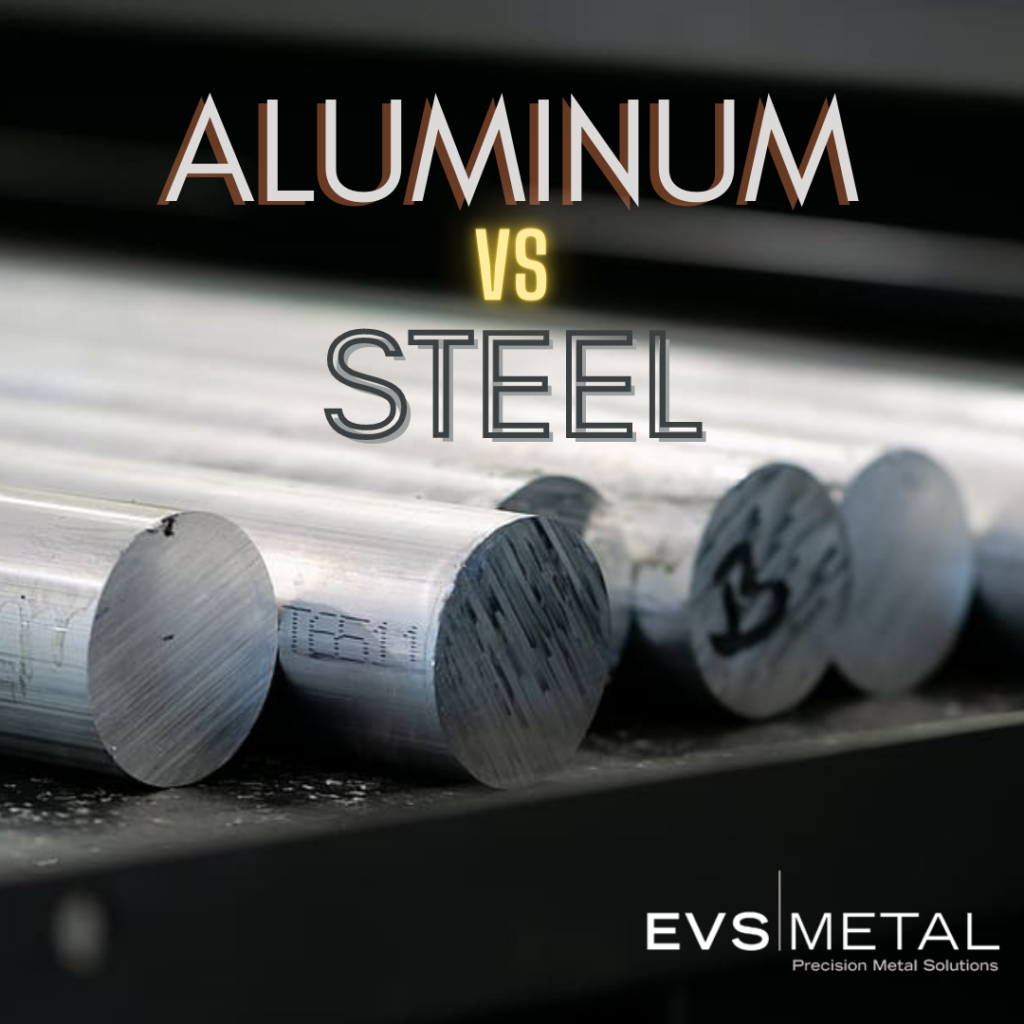
Material selection affects far more than finished part performance. It also shapes fabrication complexity, finishing requirements, cost, lead time, and long-term manufacturability. For engineers and procurement teams evaluating sheet metal components, the choice between aluminum and steel is rarely just a matter of preference. It changes how parts are cut, formed, welded, machined, finished, and assembled, which means it has practical consequences all the way through production.
Both materials are essential in precision manufacturing, and both can be the right answer depending on the application. The challenge is that they behave differently enough during fabrication that the tradeoffs matter. Weight, strength, corrosion resistance, thermal performance, weldability, and budget all enter the conversation, and those variables do not stay neatly separated from one another. In most real projects, material selection is really about deciding which compromises make the most sense for the product, the process, and the business case behind it.
At EVS Metal, aluminum and steel move through the same production environments, but not in the same way. Each material requires its own tooling, programming, process controls, and handling considerations. That is why material choice deserves attention early in the design phase, not after geometry and tolerances are already locked in. Like many broader design for manufacturability decisions, the earlier it is made thoughtfully, the easier it is to control cost, reduce risk, and improve delivery predictability.
Aluminum vs. Steel: Quick Comparison
| Property | Aluminum | Steel |
|---|---|---|
| Weight | Low | High |
| Strength | Moderate–High (alloy dependent) | High |
| Corrosion Resistance | Naturally strong | Requires finish/coating |
| Cost | Higher per lb | Lower per lb |
| Weldability | More sensitive | More forgiving |
| Thermal Conductivity | Excellent | Lower |
| Machinability | Faster, less tool wear | Slower, more tool wear |
Key Material Properties: Aluminum vs. Steel
Material properties drive both fabrication decisions and end-use performance, and the differences between aluminum and steel start with the basics. Steel generally offers greater tensile strength at comparable thickness, which is why it remains the default choice in many structural, load-bearing, and wear-sensitive applications. Aluminum, however, brings a very different advantage to the table: it delivers substantially lower weight, typically around one-third the density of steel. In applications where weight affects energy efficiency, payload, portability, handling, or motion control, that reduction can easily justify the higher material cost.
Corrosion resistance is another major divider. Aluminum naturally forms a protective oxide layer, which gives it inherent resistance in many environments without requiring additional treatment. Steel does not get that advantage. Unless stainless alloys are specified, it generally needs a protective finish to prevent corrosion, whether that means powder coating, plating, or another finishing system. That difference matters not only from a performance standpoint, but from a cost and scheduling standpoint as well, because once finishing becomes mandatory, it adds process steps, handling, and lead time.
Thermal and electrical behavior can also push the decision one way or the other. Aluminum conducts heat far more effectively than steel and also offers better electrical conductivity, which makes it attractive for heat sinks, electrical housings, RF shielding, and thermal management applications. Steel’s lower conductivity can be useful when heat retention or structural stability at elevated temperatures matters more than dissipation. Neither material is automatically better in the abstract. The question is which properties align better with the real operating conditions of the part.
Even within each material family, the answer can change depending on the alloy. Aluminum 5052 does not behave exactly like 6061, just as mild steel, stainless, and specialty grades each bring different tradeoffs in formability, weldability, corrosion resistance, and cost. That is one reason broad material selection should not stop at “aluminum or steel.” The alloy decision is often where the project either becomes easier to build or harder than it needed to be.
How Fabrication Changes Depending on the Material
The practical differences between aluminum and steel become much more obvious once fabrication begins. Both can be cut, formed, machined, and welded, but they respond differently enough that the process has to be adjusted around them. In laser cutting, for example, steel is generally easier to process because it is less reflective and more forgiving across a wide range of thicknesses. Aluminum can absolutely be laser cut, but its higher reflectivity and thermal conductivity require more careful parameter control and, in many cases, more power. Shops with strong laser cutting capabilities can handle both materials, but not with identical settings or expectations.
Forming and bending tell a similar story. Aluminum typically requires less tonnage to form than steel, which can make it feel easier from a raw force perspective, but that does not necessarily make it simpler. Depending on alloy and temper, aluminum can crack if bend radii are too tight or the process is not adjusted properly. Steel usually tolerates tighter bends more gracefully, although it demands greater forming force and more robust tooling. In other words, aluminum may move more easily, but steel often tolerates more abuse during the operation.
Machining is one place where aluminum often has a cleaner advantage. It usually cuts faster, creates less tool wear, and allows quicker secondary operations such as drilling, tapping, and milling. Steel is harder on tools and often requires slower speeds, but it can offer better dimensional stability under heavy cutting loads. That difference matters most in parts that include significant machining after primary fabrication, especially when the goal is to reduce cycle time without compromising accuracy.
Welding is another major dividing line. Steel is generally more forgiving and can be joined through several common processes with relatively broad operating windows. Aluminum is less tolerant. Its oxide layer, lower melting point, and rapid heat transfer make aluminum welding more sensitive to setup, technique, and heat input. That does not make aluminum a poor choice, but it does mean welding considerations should be part of the material conversation early, especially for assemblies with cosmetic requirements, tight tolerances, or distortion sensitivity.
Finishing and Corrosion Protection
One of the biggest downstream effects of material choice is what happens at the finishing stage. Aluminum can be used unfinished in many environments, especially where its natural corrosion resistance is sufficient. It can also be anodized, powder coated, or otherwise treated when additional protection or appearance is needed. That flexibility can simplify production in some applications and expand aesthetic options in others.
Steel usually requires a more deliberate corrosion strategy. Carbon steel parts exposed to moisture or outdoor conditions typically need finishing to survive long term, which means material cost alone does not tell the whole story. A steel part may look less expensive on paper at the raw material stage, but once finishing costs and lead time are added, aluminum can become the more competitive option. That is especially true in products where corrosion resistance is mandatory but the environment is not severe enough to justify stainless. If finishing is a central part of the decision, this topic overlaps closely with broader guidance around metal finishes and their applications and how those finish choices affect durability and manufacturability.
There is also the matter of appearance. Aluminum’s natural finish and anodizing potential make it attractive in visible, customer-facing products. Steel can absolutely deliver a high-quality cosmetic result, but it usually gets there through additional finishing steps. The right answer depends on whether the project prioritizes raw durability, decorative quality, minimal processing, or some combination of all three.
When Aluminum Makes More Sense
Aluminum tends to make the most sense when weight is not just a preference, but a performance factor. Aerospace components, transportation equipment, portable devices, automation systems, and robotic assemblies all benefit when reducing mass improves efficiency, handling, or system response. In those cases, aluminum’s lower density can create value that outweighs the higher per-pound material cost.
It is also a strong candidate in corrosion-prone environments. Outdoor housings, marine-adjacent components, food-related systems, and many electronics applications benefit from aluminum’s natural oxide layer, especially when combined with the right finish or alloy choice. That is one reason aluminum is often selected for products like electrical and electronics enclosures, where reduced weight, thermal management, and environmental resistance all matter at the same time.
Thermal performance is another reason designers lean toward aluminum. Heat sinks, LED housings, electrical enclosures, and other parts that need to move heat efficiently are often better served by aluminum simply because steel cannot match it in that area. And in visible or consumer-facing products, aluminum’s clean appearance and anodizing options can make it the easier material to work into the final design intent without layering on additional cosmetic steps.
When Steel Is the Better Choice
Steel remains the better choice in many applications for the simple reason that strength, rigidity, and cost still matter more often than people think. Structural components, support brackets, frames, and other load-bearing parts often benefit from steel’s higher strength and wear resistance, particularly when weight is not a limiting factor. If the product does not meaningfully improve by becoming lighter, aluminum’s premium may be hard to justify.
Steel also brings properties aluminum simply cannot. Magnetic behavior matters in some electrical, shielding, and industrial applications, and when it does, the material decision is essentially made for you. High-temperature conditions can push the decision in the same direction, since steel generally holds up better than aluminum when exposed to elevated heat over time.
From a cost standpoint, carbon steel is often the most economical solution when corrosion resistance is manageable and the application does not demand lightweight performance. That is why it remains such a common choice in industrial fabrication. The catch, again, is that the full decision should include finishing, handling, and production complexity rather than stopping at raw material price alone.
Cost and Lead Time Are Not Just Material Price
One of the most common ways material selection gets oversimplified is by looking only at cost per pound. That number matters, but it is not the whole story. Availability can affect timing, especially when a project calls for specialty alloys, unusual gauges, or uncommon dimensions. Common materials like 5052 aluminum, 6061 aluminum, cold-rolled steel, and standard stainless grades are usually accessible, but special requirements can quickly add procurement delays.
Processing complexity matters just as much. Aluminum may cost more upfront, but it can machine faster and, in some cases, avoid mandatory finishing. Steel may be cheaper to buy, but it can require more force to form, more finishing to protect, and additional process steps that increase total project cost. High-volume production can amplify those differences. Once cycle time, tooling wear, secondary operations, and finishing are all considered, the lower-priced material is not always the lower-cost part.
This is one reason material choice belongs in the same broader conversation as total manufacturing cost, not isolated from it. EVS has a lot of adjacent content around this same idea, including articles on the true cost of outsourcing metal fabrication and why design and sourcing decisions often create more downstream cost than teams expect at the quoting stage.
Common Material Selection Mistakes
Most material selection mistakes are not dramatic. They are usually reasonable assumptions that were never challenged early enough. One common example is specifying aluminum simply because it sounds like the more advanced choice, even when weight reduction provides no real functional value. In that situation, the project takes on additional material cost without getting much back in return.
The opposite mistake happens just as often with steel. Teams choose it because the raw material price looks lower, but do not fully account for the finishing required to make it survive in the intended environment. By the time coating, plating, handling, and lead time are factored in, the gap may narrow substantially or disappear altogether.
Other mistakes come from overlooking fabrication realities. Tight bend radii, extensive welding, complicated formed geometries, thermal expansion, and mixed-material assemblies can all make one material much more practical than the other. Stainless also gets overused as a catch-all corrosion answer, even in cases where aluminum or properly finished carbon steel would meet the requirement more economically. None of these issues are unusual. They are just easier to solve before the design is fully committed.
How EVS Metal Supports Both Aluminum and Steel Fabrication
EVS Metal operates ISO 9001:2015-certified facilities equipped to fabricate both aluminum and steel across prototype through production volumes. That includes facilities in Pennsylvania, Texas, New Jersey and New Hampshire, along with the tooling, programming, process controls, and quality systems needed to support both material families without forcing customers into one path because of shop limitations.
That dual-material capability matters because it gives engineering and procurement teams more flexibility during the design phase. Instead of locking into aluminum or steel too early, teams can evaluate the real tradeoffs around strength, weight, corrosion resistance, fabrication complexity, and total cost. EVS’s engineering and design support can help identify where a material shift may improve manufacturability, reduce cost, or simplify the downstream process.
Whether a project calls for aluminum because weight, thermal performance, or corrosion resistance matter most, or steel because strength, rigidity, or cost control take priority, EVS supports the full workflow through fabrication, machining, welding, finishing, and assembly integration. For manufacturers trying to reduce vendor sprawl and keep production more coordinated, that kind of capability makes the material decision easier to evaluate in practical terms rather than theoretical ones.
Ready to Discuss Material Selection for Your Project?
EVS Metal provides precision fabrication for both aluminum and steel components across industries including electronics, medical devices, telecommunications, automation, and industrial equipment. Our engineering teams can help evaluate material options early in the design phase to optimize performance, manufacturability, and cost. Request a quote or call (973) 839-4432 to discuss material selection and fabrication requirements for your next project.